
What Disability Taught Me About Parenting
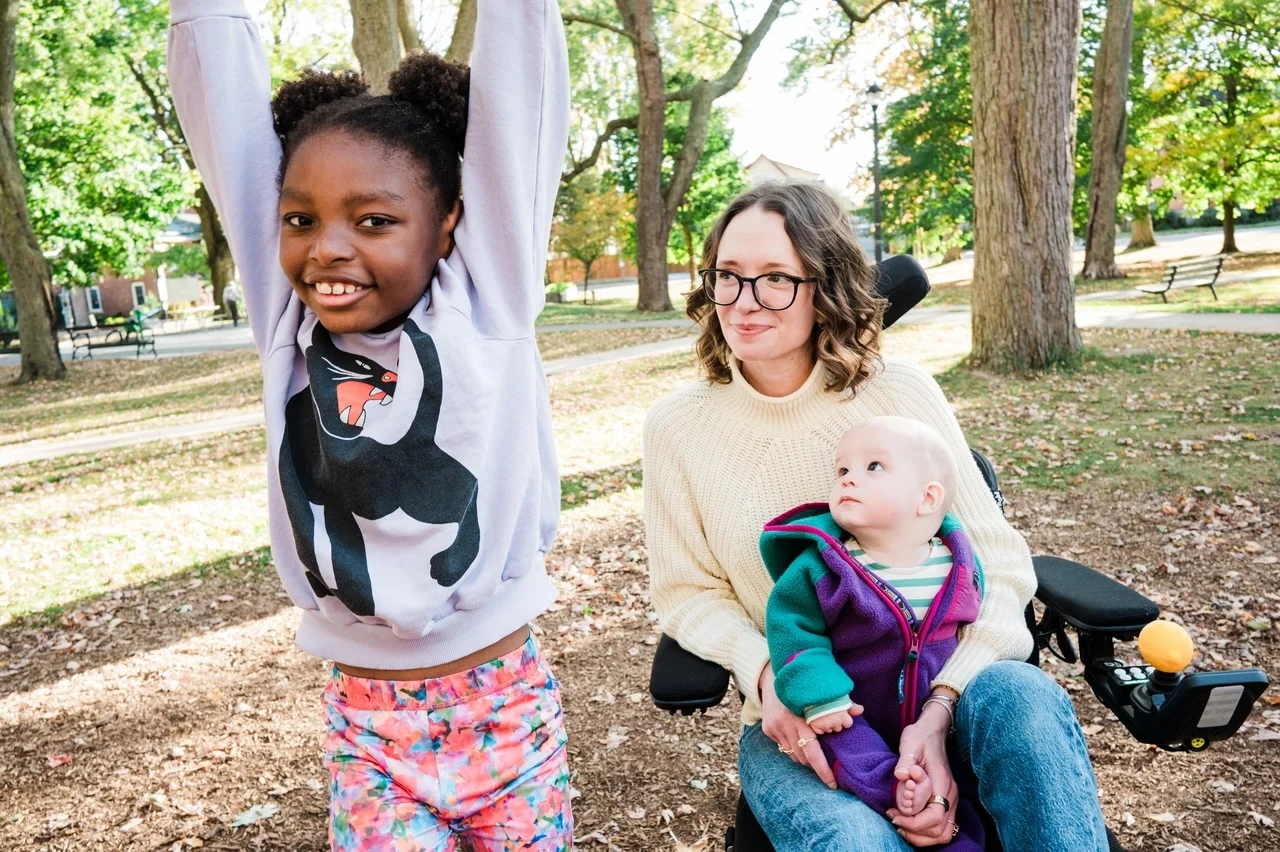
I had been disabled for six years when I became a foster mom. In order to get a foster license, my doctor needed to attest to my capacity to parent.
I agonized about asking him.
The degree to which I present as disabled varies. If I’m not using my wheelchair, and if I’m sitting somewhere with adequate supportive cushioning, I can appear well. But, my diagnoses — dysautonomia and Ehlers-Danlos syndrome — both cause unrelenting symptoms that make sitting, standing, lifting, eating, driving, and walking difficult or impossible.
My doctor knew the reality of my disability. He had witnessed my pain and uncertainty. He had watched me curl up on his table, crying. He knew how hard it was for me to take care of myself, how much I relied on readymade meal deliveries and help from friends. I couldn’t imagine what he would say when I asked for him to support my ability to care for another person.
His office had two seating options: one metal chair with cushions and the exam table. For most appointments, I waited for him on the table, lying on my side with my purse as a pillow. Sitting upright in a chair is extremely difficult for me.
This time, I forced myself to wait in the chair. Maybe if I sat there, he would forget all the visits that had come before. The room rocked and spun, my vision faded. I pushed through.
Dr. Stern came in and sat down. “What brings you in today?” he asked. I talked quickly, explaining how much my partner, David, and I had thought about the decision to be foster parents. The preparations, the money we had saved for childcare, his parental leave. Dr. Stern listened carefully and asked a couple of questions.
I answered the best I could but here is what I didn’t fully know yet: becoming disabled had prepared me to be a parent.
Before I became disabled 14 years ago, I pursued happiness and success with a manic and unrelenting drive. Here’s one example: While waiting to hear back from a graduate program in 2007, I got my real estate license. I hoped to earn some extra money that could help pay for school. My compulsion to excel, however, had other plans. Instead of simply squirreling away tuition, I became one of the top sellers in my large company in the first year, opened a new firm with other women in my second year, and was named one of the top agents in the country in my third year.
Working that hard requires regularly overriding other physical and emotional needs. Sleep, comfort, and pleasure are forgotten. Even my vacations ran on a Swiss watch schedule with the very best restaurants, most dynamic neighborhoods, and insider-only haunts.
No one will be surprised to hear that my body didn’t escape my wrath. I ran every morning, did yoga multiple times a week, and packed every meal with more nutrients than any person could possibly use.
I became disabled on an August afternoon while on a hike in Santoroni, Greece. A detour led to heat exhaustion, which led to an electrolyte imbalance, and the combination triggered a latent genetic condition. The day before the hike, I ran and danced. The day after, I could barely get out of bed.
For two years after the hike, I looked for answers. When doctors dismissed my symptoms, I wondered if they were right. Was I just worrying too much? After my diagnosis, I spent two more years grieving and accepting my new reality. I finally admitted that I would be sick forever. But then, the way I labeled myself slowly started to change. The word ‘disability’ started coming up more — my disabled parking placard, disability student services, disability insurance payments.
For me, being sick was pure loss and suffering. But being disabled brought something new: culture. I was now part of the long line of disabled people who had come before me. I started to inhale books and essays by authors who are disabled and/or write about disability: Eli Clare, Elizabeth Barnes, Julie Rehmeyer, Toni Bernhard, Jean-Dominique Bauby, Nasim Marie Jafry, Meghan O’Rourke, Leslie Jamison, Maya Dusenbery, Laura Hillenbrand, Rhoda Olkin, Cheri Blauwet, Erin Raffety, Amy Berkowitz, Nancy Eiesland, Susan Sontag, Madelyn Detloff, Rosemarie Garland-Thomson, Alice Wong, Leah Lakshmi Piepzna-Samarasinha, Elliot Kukla.
The thoughts and lives of these thinkers shifted the way I saw my own story. I started to notice the ways that becoming disabled had changed more than just my physical capacity. The years after the hike has pried my hands from their death-grip on perfectionism. For so long, I had felt like my life was almost good enough, and I drowned in the deficiencies. But disability fundamentally shifted my perspective. Every day is difficult, and a worthy life reveals itself in our capacity to connect with each other, witness good moments, and tell the truth about our lives.
The shininess of my life before disability tricked me into thinking that with enough effort, I could shoehorn my whole existence into something ideal. My days now are slow, painful, and unpredictable. But my core belief about what a day should be has totally changed. I don’t think the goal is perfection, or even joy. I think it’s the courage to tell the truth to yourself.
Becoming a parent isn’t all that different from becoming disabled. Despite our best efforts, parenting is often messy and unpredictable. Becoming a parent releases our delusion of control — or it will, if we let it.
When I imagine what the non-disabled version of me would have been like with a newborn, I feel such sadness for her and the baby. Those early parenting days have so much uncertainty and stillness and pain. She would have railed against it all. She would have missed it.
Instead, when my child came home at eight days old, I had been training, for years, to take things as they came. I was adept at days spent in bed. I was happy to wait.
Thank goodness I was disabled when I met my first foster child, whom we soon adopted, and then, seven years later, my second child. Because, as a result of this limited and aching body, I could actually be there.
Dr. Stern signed the form. “A child will be lucky to have you,” he said.
He was right.
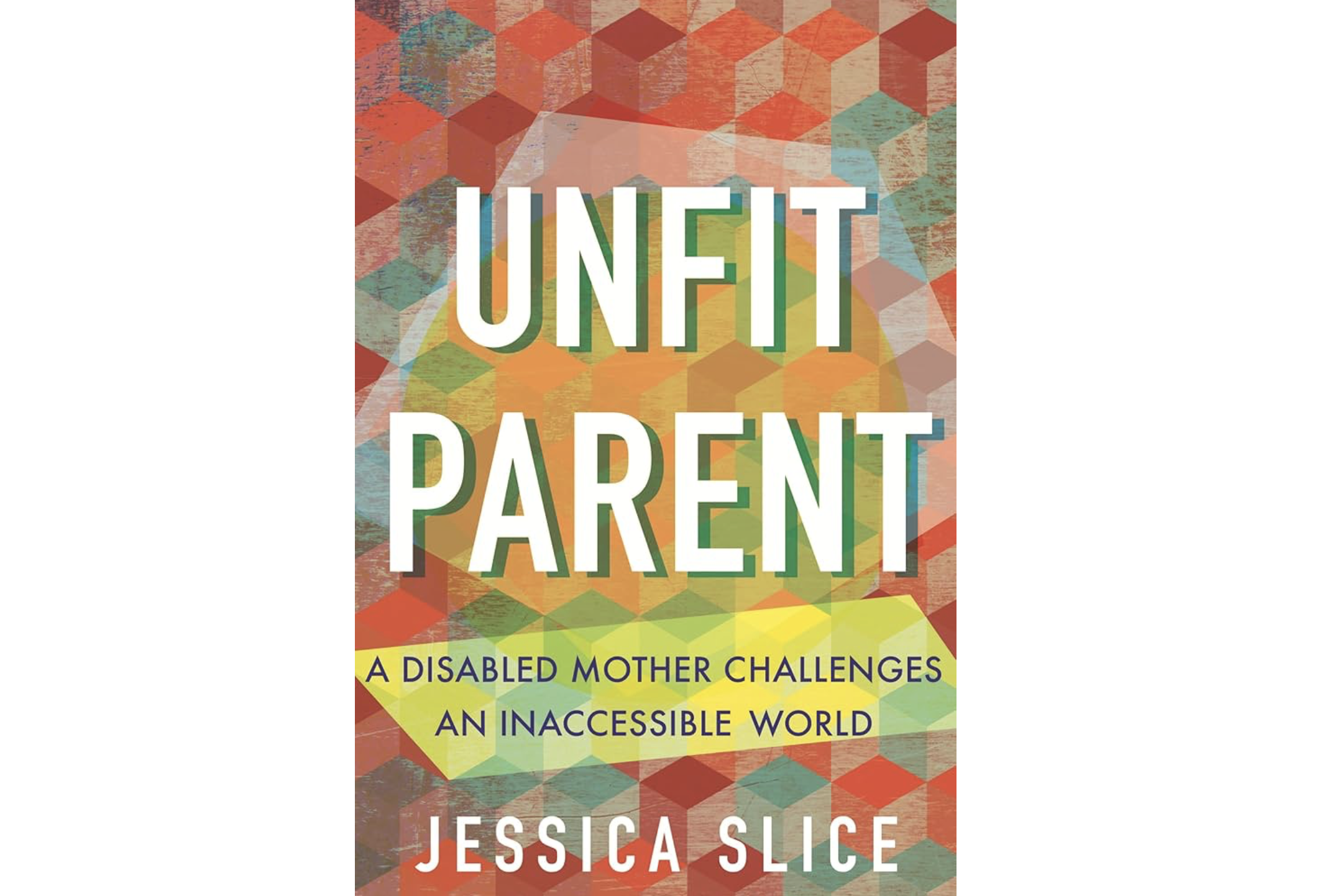
Jessica Slice is the author of Unfit Parent: A Disabled Mother Challenges an Inaccessible World, which comes out tomorrow. Her articles have also appeared in the New York Times, the Washington Post, and Glamour. She lives in Toronto with her family.
P.S. More on disability, including how to help kids navigate encounters with disability.
(Photo by Liz Cooper.)
Comments
95 commentsI too have EDS and use a wheelchair. I also have a fulltime job, do volunteering and am a parent to an 8 year old child. Before we tried to get pregnant, we saw some specialists to determine whether it would be safe. Whether it would be managable? My wrists are severely affected, to the point that all our glassware is light weight plastic, how was I to lift a baby? My doctor told me the same: “You’ve been managing your disablity so well, you allready have all the skills to manage a child”. It was a strange insight, especially in a world where I still am so often seen as less, as insufficient, as not managing anything. And it turns out, you lift babys with your whole body, not your hands, at least I did. Because my spine is pretty good, this works for me. Kid was also able to climb in my lap in no time, so lifting has never been issue.
I also have EDS and as with most people, it has affected me in various ways my entire life. I say this as I’m lucky enough to be celebrating my 72nd birthday next week. I was diagnosed in my 30’s back in the dark ages, ha. I have an extremely mobile spine and pelvis and have had many issues with unexpected hemorrhages, organ prolapse and pain, pain, pain. I also have dizziness and occasional bouts of unrelenting nausea and vomiting that land me in the ER. I’ve had several surgery failures and a few successful repairs to soft tissues and organs. I would advise anyone who has EDS to be extremely cautious about any surgeries if not life saving. Because of the years of me being in gravity (my joke about being old), my entire spine is severely degenerating. I had unsuccessful spinal fusion, failed before I left the hospital and constant burning pain in over 2/3’s of my body for at least the last 5 years. Now for the good news. I taught preschool for 35 years, raised two amazing kids and am helping with 4 amazing grand girls. I have friends, a loving husband and an active social life. Yes, I’ve had to cut back in the past 5 years but still put myself out there whenever possible. What I’ve learned is this. Pain reminds us to be in the moment at all times. Things will get worse, but also better. Nothing stays the same. Focus on others and your pain will not be as difficult in most cases. Move whenever and however your body will allow. What I’m still learning. I’ve just become visibly disabled in the past 4 years. Before that, I could hide it and act okay. Now, I’m learning it’s good to ask for help and receive it gracefully. My value has nothing to do with what I look like or my abilities or lack thereof. Many friends have dropped me because I can no longer be as active or participate in all the activities. Many new friends, don’t care. I’m not sad about losing the other “friends” because they ultimately were not meant for me. Smiles and compassion for others are daily reminders of why I’m still here. Intolerance of unkindness and cruelty are also good reasons to take action. You’re doing great and should be proud of all you’re accomplishing. Keep going and be a proud example of doing what you can at the best of your ability.
I have never written a comment on COJ, but feel so compelled to share my story after reading this. I was diagnosed with Long Covid in May of 2022 after experiencing dizziness, headaches, fatigue, and body aches. My kids were 5 and 7 at the time. I went through almost 2 years of constant doctor’s appointments. It became my full time job, trying to figure out an answer to “get better.” In my desperation, just about a year ago, I had such horrible body aches one day that I did an internet search for chronic pain. I came across Nicole Sach’s website, which led me to her podcast, “The Cure for Chronic Pain.” I found episodes of people also living with Long Covid, and I listened to their recovery stories and felt hope for the first time in a long time. A year later, I am working full time, exercising, and parenting two kids. As Nicole says, “chronic pain is an epidemic of fear and meaning. There is no cure for human pain, but there is a cure for chronic pain.” I encourage you to get her new (as of April ‘25!) book called “Mind Your Body.” Be curious. Sending so much love to all those living with chronic illness and pain.
Thank you for sharing your experience. At 14, after back to back bouts of covid and flu, my daughter developed long covid, which for her mainly includes dysautonomia, new daily persistent headache, and chronic vestibular migraine (she has some undiagnosable connective-tissue issue). It took me longer than it took her to accept that her life looks different than it used to. She lives in constant pain, takes a slew of daily supplements and medications, struggles with balance, and needs to conscious of how she exerts herself so she doesn’t get too light-headed, but she also thrives. Watching her build a life that works for her is amazing. She is headed toward work in the medical field, and her patients will be fortunate to have her–we are all fortunate to have her.
What should a day be?! Your writing is so beautiful jessica. This was the part that really hit me- we spend way too much time thinking Joy has to feel a certain way and has to consume our days. I am so glad I found you and your story. Thank you.
So grateful to you for writing and sharing this, Jessica. So many layers of wisdom to contemplate and treasure. I will be sharing with my 20 year old (college athlete) daughter who was recently diagnosed with POTS and connective tissue disorder, and her girlfriend who also has similar but so far undiagnosed symptoms. THANK YOU ❤️
This is stunningly beautiful. Thank you ❤️
I have this same condition, diagnosed at 33. While my peers were having babies I was learning to live with disability. The thing I learnt is; there are amazing things that the human body can do, and we tend to have this idealized baseline of what that is. We project it across all spaces of our health. It’s not enough that we can run if we can’t also digest well or grow lovely hair. Interesting to me was that the same friends who were in the depths of self-hatred for being unable to conceive, deliver vaginally or breastfeed a baby were also the same ones insisting I was still worthy despite being newly unable in many physical spaces myself. No one body can do everything. Ableism is real and has its reaches farther into supposedly healthy bodies than you would think.
I’ve had a similar experience with friends dealing infertility being the most understanding! I think it’s because they are also dealing with the loss of control—and a lot of people see what people go through with EDS and (consciously or not) assume that it would be different for them because they’d handle it the “right” way. I think people dealing with infertility have already had to learn that not everything is within our control and there’s not a way to game everything, which a lot of people in their 20s and 30s haven’t had to face about their own bodies yet. My best friend had a bad case of long COVID (that has improved over the years) and similarly I think that experience has made her one of the most empathetic people as I’ve gone through this.
Exactly Katie. When the body doesn’t behave as you expected it would, it’s a disappointment but it’s not a personal failure. The grief and sadness is real but the guilt and shame we need to send to the bin.
I love this post so much. This is kind of neither here nor there, but I’ve really struggled with motherhood, especially when my kids were infants (basically, the whole first year). When I read this post, it makes me wonder whether my problem was just a failure to forfeit my perfectionism. Was it that I never gave up trying to make things less horrible (and in so doing, clung to the presumption that I had some control)? Was it that I kept aiming for unachievable ideals and railed against our mutual misery?? Maybe it was. But then I also think back to those days, and I remember how unhappy my children were for almost the whole first year of their lives. How very, very much they screamed, how little they slept despite needing it, and how often some of my most basic needs (I’m talking at the level of like… caloric intake) could not be met because of what it took to meet their most basic needs. And so even in retrospect, there’s a part of me that doubts that the problem was that I failed to roll with the punches. Like, you really do need to eat! I don’t know why I’m sharing this. Maybe just to say… it made me think!
I feel this deeply. I never want to repeat my kids’ first years (they had their moments, but overall it was a stressful and exhausting experience). And yes, I think my perfectionism and the idea that I thought I had control had something to do with the exhaustion and stress.
Nice to know I’m not alone. I mean, it’s probably a mix of both unhealthy perfectionism and something else. I don’t feel like my unhappiness with ongoing hunger and severe sleep deprivation and being yelled at by my baby for 4 hours straight in the middle of the night for four or five months was due to lofty ideals.
I’ve been thinking about this- came back to say that it’s hard for anyone to enjoy screaming babies. I don’t think we need to blame our personalities or ourselves! My first was colicky, sick, and it was soooo hard to watch/listen to him suffer and to try over and over in every way I could and not be able to comfort him. My second baby was healthy, calm, and easy to comfort from the day she was born. I adored the first year with her. It was so healing. These experiences reinforced that sometimes it’s not about me, I can’t prevent my kids from ever suffering, and that mothers and motherhood contain multitudes.
This is beautiful ❤️ Thank you for sharing your experience with us all xx
Thank you so much for this beautiful essay – to the author and to the Cup of Jo team for featuring her. Jessica, your writing is gorgeous! Not a parent but this piece still resonated deeply. And thank you SO MUCH for your shout out to so many fabulous disabled writers. It was the balm I didn’t know I needed to see so many zebras in the comments of my favourite place on the internet *sob*.
This was a great read, thank you for sharing! Your children are so lucky to have you. After reading this, we plan to sell your book in our bookstore ❤️
I couldn’t have read this at a better time.
Jessica, you are such a wonderful writer and I loved this piece. In my Master’s, we academics from disability studies speak to us about the idea of us all being temporarily-abled as at some point we all will likely need physical or mental support. If we could make the world easier for disabled people as standard, this would benefit literally everyone. CoJ team – would love more from her!
Love this article. What a great mom.
“Becoming a parent releases our delusion of control — or it will, if we let it.“ This resonated so much. Add to that having kids with disabilities and you can throw your control completely away. A friend asked today if I thought I’d always find groups of parents hard because my kids are different. I said maybe I’m just learning earlier than some that we have much less control than we think and that our kids’ external accomplishments are not a direct result of our parenting. Thank you for sharing your insights!
“maybe I’m just learning earlier than some that we have much less control than we think and that our kids’ external accomplishments are not a direct result of our parenting” – YES!!!!
As a former perfectionist myself, this really resonated with me! Having our first child helped me relinquish my death grip on perfectionism, and becoming a foster parent during the early days of the Covid-19 pandemic helped me completely let it go. Life is hard! And messy! And there is also so much beauty and joy. Thanks for this. Excited to read your book.
What a wonderful essay–thank you for sharing! So many of us non-disabled moms truly do struggle brutally when we’re faced with how out of control the parenting experience really is. I love Jessica’s perspective. I noticed she’s interviewed on one of my fave podcasts (The Mother of It All) and now I can’t wait to listen!
Gorgeous.
So grateful for these beautiful words. Keep building your beautiful family the way you have grown your beautiful life – moment by rich moment. All the love.
This seemed in the deepest parts of me. I don’t want to ever forget these words.
I was poking around Jessica’s substack and came across this beautiful post about going out with her baby: https://jessicaslice.substack.com/p/halcyon-and-not-only-in-retrospect First of all, this post spoke to me bc of the photos of her sweet baby while he is sleeping and hanging out in her lap. I see these angles all the time of my baby’s fuzzy little head while she is napping and these photos were so visceral for me. She says “nothing is promised. These bodies are fragile. Everything ends. Every single life is demarcated by tragedy and loss.”
Thank you Jessica for this amazing piece, it truly made my day. I wish you all the best on your tough but beautiful journey xoxo
So fascinating—I was diagnosed with POTS/dysautonomia as a teenager and my doctor told me that his other patients were high achievers in school and athletics just like me. At the time, I dismissed it as an attempt to cheer me up, or more realistically, selection bias: Only those with the intense drive and family resources could manage to receive a diagnosis for such an obscure condition. But now in my middle age, I do wonder if there’s some association between chronic illness and traits like perfectionism that science has yet to fully understand.
This is true, and science has actually proven it. Alan Gordon and Nicole Sachs have a lot of work on this. I was diagnosed with dysautonomia and PoTS and told they’d be life long, but once I learned the science behind it, I was able to heal and no longer have either.
“Every day is difficult, and a worthy life reveals itself in our capacity to connect with each other, witness good moments, and tell the truth about our lives.” I remind myself every day. Thank you, Jessica.
such gorgeous words to live by aren’t they.
I think reading this healed my soul a tiny bit.
Same. Jessica, thank you for sharing your story–and CoJ, always, for being the kind of platform that introduces so many of us to these women!
Thank you, this is beautiful.
What a beautiful post. Jessica, I also saw – and loved – your piece in the Globe & Mail today! :)
I loved your piece in the Globe and Mail last week. I found it incredibly moving and insightful. I was thrilled to see more of your writing here! Wishing you much success with the book. We readers are lucky to have you.
Immediately put this on hold at the library. Can’t wait to read more of your story.
Oh wow, this post. I’m also a parent with EDS and POTS. I didn’t get diagnosed until after I had children, when my health rapidly declined. This isn’t the kind of parenting experience I thought I’d have at all, and there are many days where I struggle with the grief of all I can’t do for/with my kids. I try to always make sure they know I *wish* I could play tag with them, or drive for the class field trip. I try to shift my focus to what I can do, instead of dwelling on what I can’t. But it’s hard. Emotionally, spiritually, physically, hard. Really looking forward to reading your book, Jessica. And thank you for this post CoJ—I can’t tell you what it means to see an EDS parent here. And (gentle) hugs to all the other zebras in the comments! Maybe we need a CoJ EDS Discord or something…
EDS&co mom here, too! It has forced me to slow down and prioritize. Would love a space for us! It’s so hard to navigate the world when the world doesn’t want to acknowledge disability. Unless it’s disguised as a story of heroically overcoming said disability to be A Success.
I’m in tears. Thank you for writing this, from someone with dysautonomia, ME/CFS, CCI and MCAS. Just to see these types of conditions represented here and in the comments, let alone the parenting aspect, makes me feel seen and gives me more of a sense of belonging here.
Jessica! Wow you are one strong human. Kids bring joy. You bring them joy. So wonderful the family you created.
A stunning piece of writing – thank you. I can’t wait to read your book!
I’m weeping. What an absolutely beautiful and profound story and such a powerful perspective on parenthood. This line in particular has “altered my brain chemistry” as the kids say: “The shininess of my life before disability tricked me into thinking that with enough effort, I could shoehorn my whole existence into something ideal. My days now are slow, painful, and unpredictable. But my core belief about what a day should be has totally changed. I don’t think the goal is perfection, or even joy. I think it’s the courage to tell the truth to yourself.” Thank you for sharing your heart and your gifted voice with us! Your kids are SO lucky to have you as their mom!
That line also stopped me in my tracks! I re-read it four times because yes, it’s so tempting to have that illusion of control; that if I just apply more effort, I can *make* it happen the way I think it should.
This burst my heart right open. Thank you for your words and wisdom Jessica.
I think my favourite post ever on COJ. Thank you for writing this xo
Oooooof this got me weeping. As a new mom, I quickly entered the world of disability as my son was born with hearing loss. My expectations of parenthood were shattered and something totally new and beautiful has grown from them. Thank you for this incredible piece. The doctor note. Ugh. My heart.
Look up the short essay “Welcome to Holland” if you haven’t seen it. I have a similar parenting experience to what you describe, and found it very powerful/relatable
Hey I’m the mum to a 10 year old who is Hard of Hearing/Deaf, with a few extra physical challenges as well. It’s an incomparable journey eh. Not what I signed up for, lol! But woah, my understanding of the world and (dis)ability and language and communication and community is exponentially deeper. Meeting parents of kids with extra needs has made all the difference; that and the fact my kid is the coolest, sweetest and funniest person I know. High fives and handwaves from New Zealand.
Thank you for sharing your lovely words. Your children are gorgeous!
You are obviously very ABLE as a parent and a human being. Thank you for this inspired writing.
This came from a kind place, but as a heads up, a lot of disabled folks really hate riffs on able (like “differently abled”)
I so appreciate the platforming of disabled voices here, Jo! One of the biggest areas of dismay I’ve been wrestling with the new administration is eugenics rebranded as MAHA. The correlation of health and ability with morality and individual choice is breaking my heart. Every life is filled with dignity and is of value to our society. Thank you for sharing your story, Jessica!
Betsy, so nicely put re: the eugenics of the maha platform (and Trump’s general worldview).
Thank you for this. It meant a lot to me.
Beautiful piece!
“For me, being sick was pure loss and suffering. But being disabled brought something new: culture. I was now part of the long line of disabled people who had come before me.” Made me cry. Thanks for writing this.
What a beautiful piece! As a child of someone with a disability / chronic illness, childhood was a constantly inspiring and also challenging experience. My advice would be to allow space for your children to express how difficult it can be at times to experience this alongside you and be open to how you can make it easier for them. Disability and illness in a family quickly becomes the elephant in the room and it can be hard for others to ask more of someone who is already carrying so much and trying so very hard. I wouldn’t change a thing but I do wish I could have talked more openly about it. Just some loving advice from the other angle :)
The last lines – CHILLS. Thank you for writing this.
Wow! This is stunning and insightful. Thank you for writing it.
Beautiful. So beautiful. Thank you. (ordering the book).
Reading this changed me a little bit. I don’t know how or why but I will never forget it. So true and good and insightful. Thank you!
Beautiful ✨
Wishing you a joyous Mother’s Day! 🥰🫂🌼
Thanks for writing/publishing this piece <3
this is such an amazing piece, and I’m ordering this book now. I grew up with a disabled mom, and she taught me to see the world in a different way—I feel like I was able to grow up with a different perspective and it made me a more empathetic person throughout my life. My mom sometimes caught judgement for being a disabled mom with a small kid, but that’s such ableist bs. I never would have wanted a different mom than the amazing one I have.
Summer. You made me cry. Thank you.
Thank you, Jessica! You are a gifted writer and I’m excited to read more.
Oh my, I literally had chills reading this, what absolutely gorgeous writing. I cannot wait to read your book. Your child’s radiant small in the photo tells it all.
This reminds me of some friends, a married pair of doctors, whose second son was diagnosed with Williams Syndrome as a toddler. He will possibly never live independently and is certainly on a different life trajectory than his siblings and parents. My friend discussed with me how worldview changing the diagnosis was – some grief, but also a huge shift from a achievement based view. “Who am I to say whose life is worth living? Who am I to say what a valuable and meaningful life is?” I still think about her words frequently.
I was also a foster parent, and my daughter also came to us at 8 days old. So fun to find a similarity in such an unpredictable and sometimes lonely experience!
This has me in tears. I became disabled after getting COVID in 2020 (kids were 2 and 5). It took so long to get a diagnosis (POTS/ED/MCAS) it took just as long to see what a gift it was to be a disabled parent. Our society puts such an ableist view on motherhood. We are asked to prove our worth by expending the most physical energies (juggle ALL the balls. Do ALL the things) Eventually I realized that I get to show my children another way. That one’s life isn’t ‘over’ if their body changes in what it can do. That they can love someone whose life falls outside the norm. That they can receive love in so many ways. That life is rarely black or white- pain and euphoria can exist together. That it can be possible love oneself beyond convention. And that the measure of a good life is not by its length or health. And when I think of being a parent, I no longer think of achievements but of raising good humans. My disability has been a critical tool on that endeavor.
This is so beautiful. Can’t wait to read your book.
What a beautiful post! I have fibromyalgia, which often presents as back and leg pain, making it difficult for me to pick up my daughter, run around with her, play sports, etc. I’ve felt a *lot* of mom guilt over the years for it, but I also think it’s helped me better listen to my body, learn how to rest (still working on that one), and I know that I am a great mom.
Jessica is such a beautiful writer. I work as an events coordinator for an indie bookstore and we are hosting a virtual event with Jessica on 4/22 — here is the link if anyone is interested: https://www.womenandchildrenfirst.com/event/virtual-unfit-parent-disabled-mother-challenges-inaccessible-world-jessica-slice
Oh hey fellow Chicagoan. I love Women and Children First. Signing up now!
This is the BEST bookstore. I’m so excited you all are doing this event.
Dream job! I love that bookstore. Chicagoan here too – thanks for sharing the info!
This might be the most beautiful post I’ve read on here. Love.
This is important in so many ways. Thank you for sharing!
Exactly one year ago, my niece passed away from complications due to EDS, which was misdiagnosed for many years as Lyme, Epstein Barre, fibromyalgia, etc. When she didn’t respond to the treatments, it was dismissed as psychological problems. {She finally got the correct diagnosis by asking Dr. Google and then going to an out of state EDS clinic.} She was so sick every minute for years with nausea, dizziness, headaches, and intense abdominal pain, but she was able to give so much love to her small children even after she entered hospice. Reading this made my heart ache.
What a sad loss. May her memory be a blessing.
I will be reading your book. Thank you so much for writing this. I became disabled when my kids were one and four. They bring so much joy to my life, and I also grieve the loss of the things that I could do with them/for them before I became disabled. I wish they had a mother who could do more walking/crafting/art/hiking with them. And, I know that love and attention and seeing them for who they are is more important.
Beautiful. Thank you, especially for your framing of a worthy life.
Fellow EDS-er saying wow, thank you to Jessica for writing this and to CoJ for publishing something about EDS! In the thick of figuring out EDS (and accompanying issues) and whether to try to have kids through various processes, and this was so beautiful. and even beyond the motherhood part, I completely identify with the necessary shift in what a day means and what a life means and this has me weeping with recognition of those feelings.
Katie, If you haven’t discovered this already, please consider checking out The EDS Society. https://www.ehlers-danlos.com/. It’s an incredible global resource. I was even able to attend the EDS conference in Philadelphia last summer (also online) and I learned so, so much!
Hi Katie! Fellow EDS-er here. I would highly recommend seeking out a maternal-fetal specialist for high-risk pregnancies. Before even trying to conceive, it helped us understand any risks and mitigation options so we could make an informed decision. It was a very empowering conversation.
Thanks Anne! I’ve been lucky to get connected to a bunch of resources after many years of illness, but I’ve never looked into the conferences and I love that you learned a lot from it. Will look into it! Allison, thank you so much for sharing that it was an empowering experience to talk to an MFM! My health is very complicated and conception might not be in the cards for me, and I’ve been worried that it would just be overwhelming—it never occurred to me that it might be empowering. This story has struck such a chord with me, from the massive life change (hello to my fellow former busy achievers-by-any-means-necessary) to the grief to the beautiful family she’s built. My husband and I have been talking about it all day, and seeing all these zebras in the comments made it even better.
This is not necessarily on topic, since it’s not about the motherhood part, but OMG I see this so often. Women run into the ground by their own perfectionism and the circumstances – and then one thing happens on top (like an infection, or in this case, heat exhaustion) and everything changes. The thing that led to the final escalation would probably not had this devastating effect if it hadn’t come on top of the years of neglecting the body and its needs. Afterwards, people often find themselves with complex chronic illness, like Ehlers-Danlos, postural orthostatic intolerance (likely what Jessica describes when sitting up) and mast cell activation, which is my specialty. I see this again and again and again, in different shapes and colors, in all my clients. What we (personally and society-wide) do to ourselves is nothing short of insane. That all said – many people who go through this ordeal also manage to find greater meaning in it, and that is always beautiful. It is a long way to recovery (or even going in that direction), but finding a new way of living is an integral part of it – instead of pining for the old life. I am very happy to read that Jessica found her new beautiful direction in life :-)
Wow, thank you, Jessica. This was such a powerful read because it’s my story almost to a T. I, too, was diagnosed with dysautonomia, Ehlers-Danlos syndrome, and dozen other conditions in my mid-20s. I, too, was driven to excel in all areas, often at the expense of physical needs, and now understand I drove my body over the edge. And I, too, after a decade of disability am dipping my toes into motherhood, and am truly grateful for the experiences that shaped me and will allow me to better guide my child. I’m so glad to learn of your book, and excited to pick it up! I already know I will love it. Oh, and I just want to give your doctor the biggest hug! It’s such a gift to have an advocate like that on this journey.
I am five months postpartum and was just diagnosed with POTS, a type of dysautonomia. Thank you so much for sharing.
I was diagnosed with POTS at age 21 after searching for a diagnosis for 7 years. I finally saw Dr. Blair Grubb at the University of Toledo and he got me on a mix of drugs that allowed me to live a normal life. Weirdly, pregnancy cured me of POTS many years later and I haven’t taken meds regularly for over a decade. There is hope!
Thank you–I have Ehlers-Danlos, as do my grown children. This disorder shows up differently in each of us, but my state of emotional wellness has a big and immediate impact on my connective tissue. It’s a fascinating way to inhabit a body, and leaning into the curiosity eases me away from judgement of myself on one of those not-great kinds of days/weeks/months. Looking forward to reading your story.