
What’s It Like to Date While Disabled?
I always call my best friend after a date…
Once, following a dinner date, the guy texted that even though we had a lot in common, he wasn’t interested in seeing me again.
“Why do you think he said that?” my friend asked.
“I can’t be sure, but he made a ‘oh, what, ew’ face when I walked in, so I have an idea.”
“Did he know that you have cerebral palsy?”
“Yes, but that was his first time seeing it.”
“You know, a lot of my friends have bad dating stories,” she said. “Dating is tough for everyone. But dating might be the hardest on you.”
Now, I don’t think I’d win the award for “#1 Dating Survivor,” but seeking romance as someone with a visible physical disability is not easy. Sometimes I wonder if I’ve become hardy enough to persevere alone in the wilderness (I haven’t, I’d last 45 minutes). Societal norms swirl around me, though, and phantoms whisper things like, “Is her body even hot?” or “What can we do for fun other than sit down?” or “Will I have to take care of her all the time?” so that first dates can feel like inadvertently challenging a dude’s perceptions and values just by showing up. Everyone needs to make themselves vulnerable while dating, but for me, the vulnerability begins at hello.
I was curious to know how my peers felt, so I did a dating must: I started a group chat. Below, author and disability rights activist Emily Ladau, writer Rebekah Taussig, and public speaker and founder of Blindish Latina Catarina Rivera share how they dated with disability, and the mindset they had by the time they found their long-term partners.
Kelly: What do you remember about being a disabled kid and having a crush?
Emily: I learned quickly that it’s not ‘cool’ for people to return the crush of someone who has a physical disability. I was always told that dreaded line, ‘We can be friends.’ To be fair, I don’t think I could’ve articulated what that meant as a kid, and I don’t think the boys I liked could’ve, either — but their words had this undercurrent of, ‘I don’t want your stigma attached to me.’ I was never bullied, but it felt like crushing on me was a bridge too far.
Rebekah: I never expressed romantic interests out loud to anyone as a kid. Disability is one reason. It’s a vulnerable thing for anybody to express interest in someone else, and I probably anticipated that I might be unwanted because of my wheelchair. But my romantic history is unusual in that pretty early on I developed a crush on a boy from my church, and he became my first boyfriend, and then my first husband.
Catarina: I wasn’t diagnosed with blindness until I was 17, so as a child I only had hearing aids — and they could be concealed by my hair. I don’t remember being bullied because of my disability, but I do remember being upset when a boy told me I had hairy arms. For me, it was more about feeling like I didn’t match the girls I saw in magazines or movies because I was Latina.
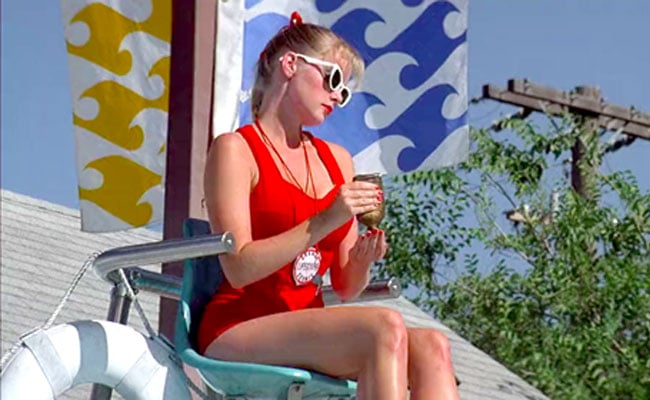
Rebekah: Did you ever watch The Sandlot? I remember thinking, ‘The lifeguard at the pool. That’s the type of girl who is crush-worthy, not me.’
Kelly: As I got older, I became aware of how different I was — I was almost always the only visibly disabled person in any room — and as a young adult, I never acknowledged my cerebral palsy unless I could frame it as a positive. What was it like for you?
Emily: I didn’t want to draw any extra attention to myself, so I decided I couldn’t date someone who was also disabled. But funnily enough, my first serious boyfriend was a wheelchair user, too. I realized that if I didn’t want people to have negative connotations of my disability, then I couldn’t be a hypocrite. There’s also something to be said about being with someone who has a direct insight into your lived experiences. He faced the same stigmas, and that helped me realized that there was nothing wrong with me. That lesson takes so much time to sink in, though.
Catarina: I struggled when I was diagnosed with blindness at 17, because I had to learn about an entirely new disability. It felt very heavy, almost like a secret, because I was so concerned about blending in as a young adult. I did not want to use a cane. I would go to parties in New York City, and then, of course, it was noisy or dark and I would get disoriented. If I went out with friends, and someone asked me to dance, it was easier to keep on dancing so I could postpone looking for my friends.
Kelly: I know the feeling! I once met a guy while sitting at a bar, and we hit it off. But I was scared to stand up and see his reaction. I felt almost like I tricked him. So, I just pretended that it was the most comfortable seat I had ever known, and I couldn’t possibly leave it — even when he did, because the bar eventually closed.
Catarina: It felt like being disabled was unattractive, and something not everyone would accept. I had this arbitrary deadline that I had to find someone before I started using a cane. In my twenty-something mind, I thought that using a cane made me damaged goods.
Rebekah: I developed an attachment to my first husband because I kept thinking, ‘It’s very unlikely that anyone will ever choose me, but if this boy chooses me, then I’ll have a shot at being in a relationship.’ I would literally wish this on a star outside my childhood bedroom. By the time we got married, it felt like going through with it was my only chance. After we got divorced, I was only 23. But with a little more life experience, I started to realize that there were more people who might be interested in me than I’d realized.
Kelly: What was it like to set up a dating app profile? Were you guarded or open with your disability?
Rebekah: I made a profile back when it was so cool to write paragraphs about yourself. I spent so much time answering every prompt. As a disabled person, you preemptively try to put people at ease — it’s so ingrained in us to make others comfortable! I made sure that I showed myself in my chair, too. But then I’d go on these dates and realize they hadn’t looked at all the photos or read what I wrote. I remember one guy who spoke very carefully, and clearly didn’t want to say the wrong thing. And how are you supposed to have a fun date if it feels like you’re on the record?
Emily: It’s one thing to go into a room, where my disability is abundantly clear, and it’s another thing to be online where it’s not. When I first went on the dating apps years ago, I hid my disability. I would drop the bomb after talking for a while, thinking I could charm them enough with my personality that they wouldn’t care. It was a disaster, and I eventually learned to just put it all out there. I got fewer matches, and people unmatched me after they actually looked at my profile. It was a process. But I had to learn that if I wasn’t comfortable being myself, I wouldn’t find the right partner for me.
Kelly: When I meet someone new, and they’re not disabled, my disability might seem like a touchy subject. It’s easy to forget that everyone has sensitive subjects, and it takes time to even things out. What was the difference when you met your current partners?
Catarina: I met my partner at a party, and there were several months between when we met and saw each other again. We wrote back and forth in between. It was a different experience, because there was already a level of trust when we talked about it. I remember that he didn’t react in any big way. He was curious to know more, but he wasn’t intimidated.
Emily: To be honest, I don’t remember a conversation where we talked about my disability. I’m sure it happened, since we met on Hinge, but I have no recollection of those conversations — which I think is a good thing.
Rebekah: I was so delighted by my partner Micah’s messages; he’s a beautiful writer. We wrote back and forth for a while, and he was the one to bring up my disability based on something I wrote to him — so I knew he was reading my words carefully and asking questions about who I was. Not questions like, “Can you have sex?” or “What happened to you?” which I used to get asked a lot. I remember feeling like he saw me as a whole person.
Kelly: Like the disability part was folded in.
Rebekah: Exactly. It was never about him being non-disabled and me being disabled — like this divide. Accepting our bodies as they were from the beginning has made it easier on us as they’ve changed over the years. We’ve built the muscle of adapting in our relationship.
Emily: The thing is, everyone needs support. A good relationship means finding that balance together, whatever that looks like.
Dating is hard. Maybe sparks would fly more freely if disability could be approached lightly — in the same way that you might ask where someone grew up and why they never put olives on pizza. A disability is just another layer to learn about before it’s woven into all the little things that make someone who they are. That’s all anyone wants in a relationship, anyway: The chance to be loved for their whole complicated self.
Kelly Dawson is a writer, editor, and marketing consultant based in Los Angeles. She’s written for Cup of Jo about navigating NYC with a disability and why having a disability can be funny. Shoot your shot with her on Instagram, if you’d like (she’s single!).
P.S. Joanna’s #1 dating rule and 14 great reader comments on dating.
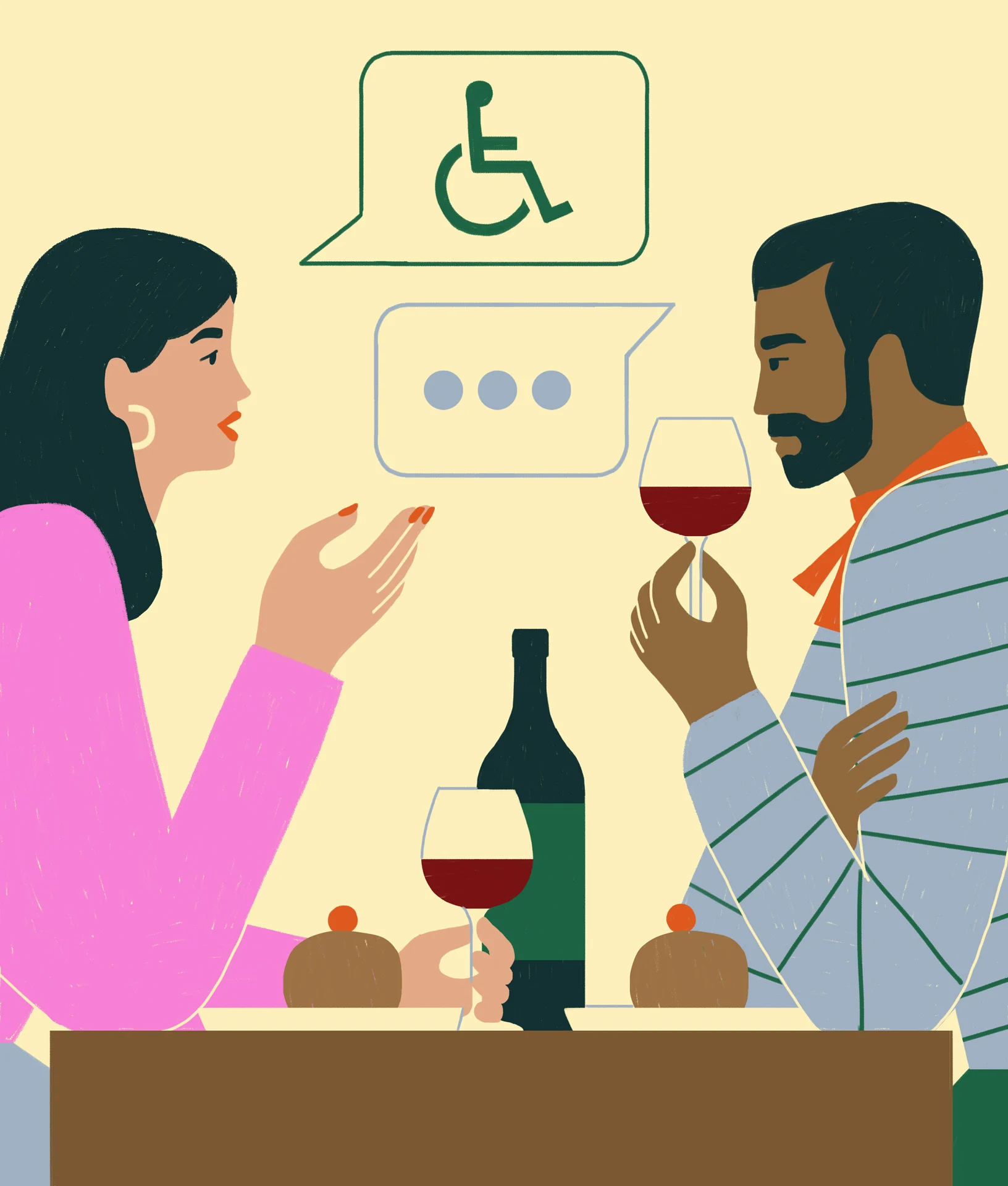
(Illustration by Abbey Lossing.)
Tags: disability
Comments
81 commentsThank you for sharing your stories! I have a disability that you can’t see at first, but very well when I’m without clothes… so I’m always looking for the right timing to mention it and I’m always scared of the reactions even though I never have experienced something bad (I try to tell myself that my boobs are so pretty that they distract from everything else).
I feel so seen. Thank you. I’m not dating– I celebrate my twentieth anniversary next week– but as someone hearing impaired and visually impaired, I have had many of these things happen to me. And making new friends is a lot like dating, so these things still happen to me.
Kelly, you don’t need me to tell you this.. but I just popped over to your IG and thought, who wouldn’t want to date her?? You’re smart, self reflective, creative, funny, a total babe, and honestly so cool. I know I’m also all of those things too, but I was single in NYC for SO LONG that it made me doubt them. But it only took one. X, Jenny (+husband who was worth waiting for that I found in my mid 30s +baby daughter who is the other love of my life)
Jenny, I’m so glad I saw your comment! Your words really mean so much to me, thank you. The other day, I was in a store selling necklaces with sardines on the chains. I love sardines, but then I remembered this line an older gentleman once said to me when I told him about a guy I was seeing (he asked). He said, “Don’t be out here trying to catch a man! Remember, YOU ARE THE FISH!” My friends and I still say it to each other sometimes. So I’ll take your sweet words and this sardine necklace with me, trying to keep in mind that I’m the fish and I only need one (glad you found yours!). xo
I am so inspired by these women! Their willingness to share their lives and the lessons they’ve learned. Thank you for featuring their beautiful voices 🩷
I’m hard of hearing and have worn hearing aids since I was 4. I consider it an invisible disability because people don’t know unless my hair is up or I tell them. I do feel like I have to “come out” when dating and appreciate this article. Thank you for sharing this perspective.
Loved reading all these perspectives! So many wonderful gems that are both very specific and universal. “We’ve built the muscle of adapting in our relationship” will stick with me.
Such a great story! I too would enjoy more posts like this. You might consider a week of outfits from the incredibly inspiring April Lockhart. I love following her because her content is so joyful and creative! https://www.instagram.com/aprillockhart?igsh=NTc4MTIwNjQ2YQ==
💙💙
Thank you for sharing stories about everyone! Last week, we learned that our baby will be born with a visible limb difference/disability (we’re still learning and navigating the news). It also feels a little lonely because none of our friends have been on this journey. I thought to myself ‘I wonder if Cup of Jo has any articles’. You do! It’s really nice to read real life experiences from the perspective of someone with disabilities. Thank you for sharing your stories!
Hi Eileen – hearing your experience reminded me of something from a few years back. Some long time friends of mine and I were taking a tour of Yellowstone with this amazing (both for his knowledge of animals, appreciation of nature and lets be honest – his unbelievable hotness) and young tour guide. During our day together he shared that he and his wife were expecting their first child and just found out that their daughter would be born missing the bottom part of her arm. One of the friends I was with is a pediatrician and reassured our guide that kids are incredibly adept at adapting. And then we were all remembering a high school classmate of ours who was born missing a hand and was an incredible athlete and well liked and the missing limb was just a part of who she was – along with having athleticism and a fantastic head of hair. Congrats on the baby!
Thank you for spotlighting people with disabilities! It’s so good to hear others’ perspectives, especially on something that is anxiety-inducing for even the Wendy Peppercorns of the world (or so I would assume). I actually related a lot to what was said here as a fat person. The stigma, the embarrassment, the desire to hide in online profiles but knowing it’s better to be honest. Check, check, check. Dating While Fat would also be a great blog post, Joanna! <3
gosh yes. 100%.
I’m a type 1 diabetic with all sorts of “robot parts” stuck to me at all times. When I was dating it was never easy for me to talk about at first, but then something inevitably would beep or vibrate and that would blow my cover for me. Plus, it was important for whoever I was with to know what to do in case of a blood sugar emergency. I was lucky that partners were never weirded out (at least to my face) about my bionic bits. But it was always hard for me to feel “hot” in the moment when a cord would get tangled or beep or rip off at an inopportune time.
Thank you all for sharing your perspectives!
Wow, this was such a validating read! As someone born with a noticeable physical disability, dating and finding love were two of the most intimidating topics for me growing up. I wish I could have read this as a young teenager. There was always so much uncertainty around the topic, but then I would get in my head and wonder if I was overthinking it or if I really did feel more vulnerable than my nondisabled friends when trying to put myself out there. I always love seeing Kelly Dawson’s work on Cup of Jo, and this is her best yet! (Oh, and, spoiler alert — I found a wonderful partner.)
Thank you for Kelly and sharing her group chat and cupofjo team for this post. Appreciate all that was shared and would love to see more content like this!
Such an interesting POV as always! Thanks all for sharing!
Loved this piece!
❤️
I have endometriosis and because of that I’ve gone through a lot of awkward dating conversations over the years. Yes it’s weird to talk about chronic pain or infertility over an early coffee, or to feel like rescheduling because my belly was so distended I looked six months pregnant. It’s always been a bit awkward to have to show someone new how to navigate my body, but as a queer -and- disabled person, I am constantly reminded that we show up in the bodies we have, and if they don’t want these bodies, then they don’t get the rest. If I’m willing to figure out whatever their deal is, they should be too. And the creative solutions can be so magical! For example, I have intermittent mobility issues because of the endo, which means sometimes I use a cane and sometimes I don’t. My bf is a hobbyist woodworker and last year he gave me a gorgeous custom made cane for Christmas. I now feel so proud and fancy about using my cane. I definitely use it wayyyy more than I would have before, and that means I’m out in the world more than before too. Which means more conversations about a now-visible disability, but with new literal and figurative support that I so appreciate and deserve.
I’ve recently got endometriosis dignose and although I’m married I sometimes wonder how would be dating look like right now. Thank you for your input Sophie.
I remember many years ago there was a blog I believe called “The girl with the purple cane” and it was so good, educational and cool the way how she explained her issues, her solutions, what she was educating other people on. I googled but could not find anything (the blog I mean). One of the cool facts was that if, like in her case, you needed a cane, there was (or maybe still is) one USA catalog for “support devices” (don’t know the correct name) and everything was one size fits all (obvs. not true) and everything was beige and everything did not change since 1982 (or sth like that). I found it super interesting to read that and how she lobbied for more options, being seen and heard etc. If anyone knows here, I would love to read an article here or anywhere. PS: The called herself the girl with the purple cane because she (or a friend) painted her support device in purple. Class! :)
I rabbit-holed on this. Her name is Liz Jackson, she no longer has that blog, however she does publish work at New Republic now. https://newrepublic.com/authors/liz-jackson
Thank you for sharing your stories with us Kelly, Emily, Rebekah, and Catarina! I love what Rebekah had to say – “Accepting our bodies as they were from the beginning has made it easier on us as they’ve changed over the years. We’ve built the muscle of adapting in our relationship.” It’s wisdom I want to carry through life with me
This piece is so great, and I love Emily’s wisdom—”But I had to learn that if I wasn’t comfortable being myself, I wouldn’t find the right partner for me.” Universal advice for sure. The thing I love about this article is both the highlight on the experiences of people with disabilities trying to date AND how relatable it all is—not the same but everyone can see at least part of their experience in these stories.
Thank you so much for this! I really appreciate you consistently sharing stories from folks with disabilities. I would love a second installment featuring people who became disabled while already partnered/already parenting.
I agree, that would be a really valuable viewpoint as well!
I feel like I could volunteer for that piece! My partner and I are coincidentally both disabled, and while I was disabled *before* my kiddo came along, his came along *after* his kiddos arrived. We have a lot of debates back and forth about their different experiences with us as parents.
Yes!!! Would love to see this article!! For me, already being a parent (1 & 4 year olds) when I became disabled made it easier in some ways to adapt and harder in others. My kids had already taught me so much about keeping the important stuff and letting everything else go, about how to put myself and my needs on the list even when it seems impossible, and of course about the power of love and sleep. And then of course it was hard to figure out how to parent in a different body, and so sad when inaccessibility made it impossible to do important things with my kids (end of nursery school picnic! Seeing my kid’s second floor classroom! Taking them hiking!). Hearing other disabled parents and disabled moms’ joy, pain and solidarity helps me so much.
Yes Cara! There’s a lot of grief around letting go of the parent I thought I’d be, and I’m still learning to embrace the parent I am—while also parenting and trying to care for my body. It’s a lot! If you’ve read anything that’s helped you please do share!
Unfit Parent is a book about parenting as a disabled person and an all-around good read full of education and humor. I was briefly disabled during my pregnancy and again immediately after delivery. I had Intersection Syndrome in both hands and couldn’t hold my child. It completely changed my relationship for the better.
Loved reading this piece! Thank you, Emily, Rebekah, Catarina and Kelly for sharing your stories! I had a friend growing up who wore hearing aids, and I remember when we were in middle school, she used to talk a lot about how boys would only ever see her “as a friend,” and of course, we would always say, “that’s not true! No one sees you differently because of your hearing aids!” but we knew that probably wasn’t entirely true. Sometimes even if someone saw you wore reading glasses or shoe orthotics they would act as though they didn’t know you at that age. Other accessibility devices were way more heavily stigmatized. These conversations feel really important, thank you for bringing awareness to your experiences.
I’d like to reiterate what other comments have said, that this content is appreciated! <3 Also, I recently listened to this podcast interview on the topic of being disabled and dating (and really so much more). It was SO good, thought-provoking, and funny. Many good take-aways for all humans :) (https://open.spotify.com/episode/5HtMagL5GWCOobbOW91sDU?si=776128d7251b4413) "How to Love Your Body Now with Carson Tueller" My partner is disabled, and when we were first chatting via a dating app, pre-meeting face to face, he told me about it, with the caveat that he understood if it was a "turn-off". I understood why he said it, but I felt sad to think of what responses/rejection he's experienced in the past. Since we've been together, it's been interesting to observe in myself how in the early days of dating, his disability seemed like a significant attribute, and now I mostly only think about it when someone else (usually a server or shopkeeper) says something about it. (I feel super defensive of him, and am guilty of giving the occasional stink-eye to particularly insensitive remarks. 😬) Otherwise, my partner is who he is — I loved the concluding lines of the post "Maybe sparks would fly more freely if disability could be approached lightly — in the same way that you might ask where someone grew up and why they never put olives on pizza"
Beautiful writing and an important topic.
Thank you for sharing these experiences!
Love Kelly! I took me a few months when I started dating my now fiancée to really internalise the message that I did deserve a relationship as a disabled person.
I so appreciated and enjoyed these stories! Thank you for sharing ❤️
This post didn’t get many comments so I’m commenting. It was interesting “listening in” on this conversation, I have a lot of heart for these women and appreciate what they shared. Please keep posting this type of content even if it doesn’t get high engagement. It’s important. Hairy arms unite!
This is so beautifully written. It made me feel like I was at brunch with the best kind of friends! Witty, insightful, and willing to share good stories from their lives.
I really really loved hearing from these women, and I am sad that the dating world and the world at large can be such a hostile place for them…that they’d feel the need to hide parts of themselves. I would love to see visible (and invisible) disabilities normalized as much as possible everywhere. Most of us have invisible challenges with mental health at times, and I want to live in a world that is accepting of the whole complex range of human experience. I think acknowledging and accepting and appreciating a very wide spectrum of strengths and weaknesses in ourselves and those around us makes us all better, kinder people.
As I have become disabled I have realised how totally ridiculous it is for anyone to assume disability is anything other than a normal and expected part of humanity. Almost everyone on earth is only ever temporarily abled. I think it is in everyone’s best interest to listen and learn from those who are pro at it already.
Yes!!!!!
So true!
Yes! I do not (yet) have a disability, but watching my parents age makes me realize that, if we’re lucky enough to get old, we’re all going to end up with bodies that function quite differently than they did at 30 or 40 or 50. Disability accommodations and regulations help *everyone.*
100%
Such great writing! And I love this conversational format. Thanks for beautiful writing that shows aspects of, to quite Kelly, our whole complicated selves.
Thank you SO MUCH for sharing this type of content. As a disabled person who has recently divorced, and never really dated, this is a topic that is very relevant to me. I have not attempted to date or using dating apps yet because I just don’t even know how to approach it with everything I live with, and I’m not sure I’m feeling mentally resilient enough yet to endure ableist comments that will come with wading into dating. I became disabled by post viral illness and POTS, and many of the conditions that go with those, it in my early thirties (I am now almost 40). My ex husband left me in part because I wasn’t able to have sex the way he wanted to and he said he wanted to be with an able bodied person. So I am still recovering from that and adjusting to my new capacities. To intermingle my disabilities with a new romantic partner seems overwhelming!
I am so incredibly sorry you experienced that.
I am so sorry that happened to you. You deserve someone who loves all of you. In case you’re feeling any individual-type shame about this, and you haven’t heard this yet: I wanted to tell you that there is lots of research showing it is very common in heterosexual relationships for men to initiate a divorce when their wife becomes seriously ill or disabled. (If the husband is ill/disabled divorce becomes less likely than if he’s healthy… this was always one of my moderation examples when I taught undergrad statistics). I am rooting for you 💕
I’m so sorry Anon. This has been a huge issue in my relationship as well. We are still together, for now, but I don’t know what will happen. I refuse to compromise my health and wellbeing for his libido. I’ll say this: becoming disabled mid-marriage definitely pulls back the curtain. I hope you can find someone who truly values and respects you. You deserve that much and more. ❤️
Thank you Anne Jordan, Cara, and Anon2 for your kind comments!
Great post – really appreciate these voices and perspective and would love to see more like this on coj!
What a wonderful read, thank you!!!!
Thank you for this! As a mom to two daughters, one with cerebral palsy and the other who wears hearing aids, I have wondered how to help them navigate crushes/dating. They are only 13 and quite shy, so I fear for the inevitable rejections as they get older, and these perspectives are so helpful to show as examples.
Love this. I read the book Love, Sex, and Disability by Sarah Smith Rainey many years ago and thought it was very insightful.
Thanks for sharing this post. My ex-husband had a progressive neurological condition and used a wheelchair. After 10 years of marriage, he was the one who ended things, saying he didn’t feel there was enough room for both his physical needs and my mental health needs. After the divorce, I was surprised by how many people assumed I was the one who ended things, like they couldn’t imagine the person with the visible disability being the one to end the relationship. It really opened my eyes to the assumptions people make and how important mutual respect and support are, no matter whether needs are visible or not.
Such an interesting post, I would have loved to keep reading. Thank you all for sharing!! Adding to this I would be curious to read about the experience from queer people with disabilities. Does the dating dynamic change? And if so how is it? Please keep sharing these kind of posts, it’s beautiful to get a glimpse on all the range of human experiences.
This podcast episode may be right up your alley! https://open.spotify.com/episode/5HtMagL5GWCOobbOW91sDU?si=776128d7251b4413 “How to Love Your Body Now with Carson Tueller”
Thank you so much Kat! I love the podcast “We can do hard things” but somehow I had missed this episode. thank you!!
I loved reading this, thank you so much for featuring it! Timely issues in my own life and it’s always so helpful and heartening hearing about other disabled women’s experiences. For more reading, I recently checked out Dateable from the library, co-authored by Jessica Slice, who wrote the great Unfit Parent, and think it’s another great resource on this generally under-talked-about topic.
Another vote for Unfit Parent! I’ll have to check out the other book.
With social media designed to feed us algorithmically more of what it knows we are already familiar with and like, I come with the passing years to value independent journalism more and more. Cup of Jo does a splendid job of expanding my perspective by treating everyone in our community as the fascinating, worthy people that they are. Thank you! Kelly, Rebekah, Catarina, Emily, thank you for sharing your experiences and voices. I loved this piece and look forward to more.
My Deaf kiddo is only 7, but I sometimes wonder what his future holds. His cochlear implants are visible and often commented on/questioned (which he already hates), but Deaf kids can do absolutely anything hearing kids can do…except hear. So, I hope his future in this generation of more tolerant peers is bright and the pathway to partnership is a little less bumpy – in part because of conversations like these. x
I went to med school with a hottie with cochlear implants and everyone was trying to date him. He’s in specialty training for reconstructive surgery for children’s ears now!
Great post!
Thank you for posting this. A much needed perspective. Love this space and this community.
As a person with a currently “invisible” disability (ehlers danlos), and who most likely will experience visible disability in my future, I’m so incredibly grateful for any and all content and discussions about abilities and experiences. I was only diagnosed a few years ago, at 48. For most of my life, I just didn’t pay close attention to something that I didn’t think was about me. Typical able bodied self centeredness and bias. I’m ashamed now that I didn’t learn, listen, notice, advocate, empathize. Almost all of us will experience some level of something disabling in our lives, sometimes temporarily, sometimes permanently. All of us should care, because of that, and because it’s right too. I wish we acknowledged disability and it’s gifts and challenges as just a part of our human experience and not something other. I hope I’m expressing this well. I’m new here. And there’s a lot to understand. All this to say, thank you for the spot light here. It’s so appreciated.
I second this. In my early 30s I was struck by a car and was visibly disabled for 2-3 years until I could walk again properly . Those four years of experiencing how the world interacted with me before, during and after taught me so much. This is such a beautiful story and thank you for sharing.
Some incredible insights here about how people frame disability and love. I was struck by the phrase “the muscle of adapting” as it relates to being in a partnership. I also cracked up at the author’s note that she’d last 45 minutes in the wilderness. Not an hour! 45 minutes. This was both delightful and gut-level honest. Thanks to everyone involved.
Kelly, I appreciate you and your friends weighing in on this. I stopped needing mobility aids after successful spinal surgeries, but I still feel like I don’t fully identify as an able bodied person. When I used a chair as a teen, that absolutely seemed to be the part of me people saw first. In a way, that universality made life simpler. Now that I’m just an extra short lady with a very subtle disfigurement and a strained gait, I seem to confuse people – should they help me? Should they ask? I don’t want people to seem uncomfortable around me, but I have every intention to keep politely asking tall strangers for help in the grocery store. I haven’t been in the dating scene for many years, but I would imagine that this amplifies those questions significantly. I’m sure everyone has at least one area in their lives where they could benefit from more self-advocacy role models – for me, it’s job hunting while physically limited – so I appreciate your perspectives greatly.
Here for Kelly’s writing!! Can’t wait for her next piece… and I would love to hear from Jessica Slice again soon too 💕 Her book “Unfit Parent was amazing if anyone is looking for a book right now
She also wrote a book about dating as a disabled person!
**chefs kiss** Kelly nailed it again!
I know Catarina from when she was a Teach For America alumna and have been following her adventures. Her zest for life, adventurous spirit and empathy are very inspiring!
I somehow recently got fed some videos on this couple Hannah and Shane and have been quite intrigued by their story. https://www.youtube.com/watch?v=zwDzIpMQ3Ak. I’ve had the chance to meet a friend’s son who was paralyzed from the waist down as a teen. He is now a father to 2 kids and travels and works and makes mistakes just like we all do. At the end of the day, people just want to be loved, accepted, respected and seen. And we all have abilities and disabilities – some more visible than others. Thanks for this piece!
For anyone looking for info for their kids, Shane Burcaw has a great Ask me Anything-type book for kids about having a disability.
I love this: “At the end of the day, people just want to be loved, accepted, respected and seen.” So true, so beautiful. x
Thanks for taking the chance to be vulnerable and share with us! This is an interesting perspective that I haven’t thought about so it was cool to read and learn a bit.
I find this content really useful. I wish that I had to access to this dialogue when I was younger. I think it also would’ve been helpful to see women with disabilities, living their lives in media. Please post more content like this. I appreciate cup of jo sharing all different experiences.
Totally agree! I also appreciate the honesty and vulnerability shared. I will say, I also felt like only people who looked like the lifeguard in the Sandlot were worthy of significant others. I am a 2nd generation Korean American, and everyone around me was blonde, blue-eyed. I felt othered in many ways.