
My Daughter Has Autism. Here’s What I Want You To Know.
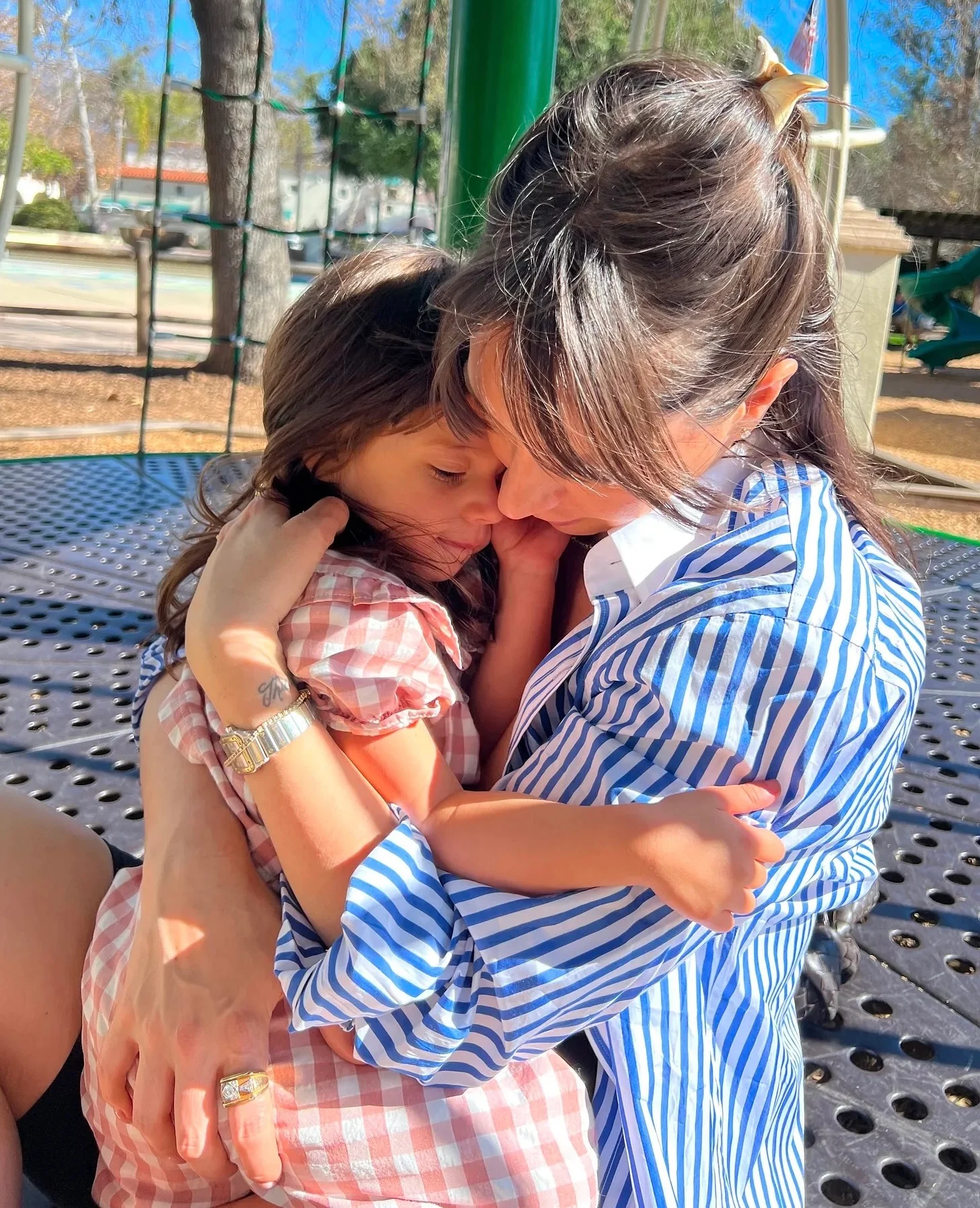
I wish you could see my face right now. There’s a lost, stoic stare I do everything in my power to avoid wearing. I don’t love the “Oh my god, how do you do it all” thing, but I have to be honest: The last three years have been about survival.
My husband Davide and I tried for more than a year to conceive. I weathered a miscarriage, and the grief that followed, then kept moving. A fertility doctor told us we wouldn’t be able to get pregnant on our own, but then, just before beginning IVF, the miracle happened.
When Carmela was born, we were on another level of joy. She was a happy, social baby. She made eye contact and laughed. But I started noticing some physical delays. At six months, she couldn’t hold her own bottle, and I could see that other babies were stronger. She couldn’t hold herself up on a slide. But she seemed on track in every other way, so I filed the thought away.
The real panic began around one year, and was in full swing by 18 months. That’s the age when children who aren’t meeting certain milestones — like walking or standing — qualify for government intervention programs. Carmela wasn’t even pulling to stand.
I tried to stay calm, telling myself what everyone else was saying: “Crawling for a long time is great for development!” But it was becoming obvious that something was off. What I didn’t realize was that this was the first in a lifetime of experiences of her being different. The stares. My awkward, fumbling excuses. The way I had to decompress after every social situation, processing what had just happened, while acting like nothing had.
We found a new pediatrician — a warm, careful woman who also happened to have a neurodivergent child. She sat with Carmela for 45 minutes, then looked at me and said, “Your daughter hasn’t made eye contact with me this entire time. She’s not physically where she needs to be.” She urged us to start immediate intervention at our regional center.
We began the long, bureaucratic process, which required a patience I had to build on the spot. While waiting, I found a physical therapist in town, who turned out to be exactly what Carmela needed. It took six more months, but she eventually learned to walk. I also dove into research and finally understood the thing no one, frankly, had the guts to tell me: The brain controls the body, and if those two things aren’t communicating properly, you’re not just dealing with physical delays, but neurological ones. I took Carmela to a neurologist, who ran genetic tests. The result came back quickly: Carmela had the SCN2A variant, which causes autism, hypotonia, and a range of other conditions.
I processed all of this privately — the appointments, the paperwork, the physical therapy runs across town — all the while trying to show up at dinner parties, and answer the question: “How’s being a mom?” I would break into a strange, nervous mumble about how she was doing great but there were delays and there was this mutation, and we weren’t really sure what it all meant. I was a mess. I didn’t have the language for anything yet.
Davide was heartbroken in a different way. At first, he kept repeating: There’s nothing wrong with her. She’s perfect. And she was. But at the park one day, I pointed out to him all the things she couldn’t physically do. We broke down. I explained that the earlier we intervened, the better off she’d be.
We got Carmela’s official diagnosis at two. Your daughter has autism. After the doctor’s appointment, we got into our car, and my husband and I just wailed. Minutes later, Carmela started wailing — she knew, as she always does. My darling girl, so far away, yet deeply connected. In that moment, I realized how critical it was for me to control my emotions and feelings around her, no matter how valid they were.
It’s been almost three years since her diagnosis. A blur of appointments, daily therapies, getting into preschool, needing to switch preschools, and the endless search for specialists, programs, and TikTok posts that might give me one more answer. I’ve gotten good at getting lost in the doing. The more I push forward, the more appointments she has, the more I feel like we’re laying a path to help her. That’s what keeps me sane.
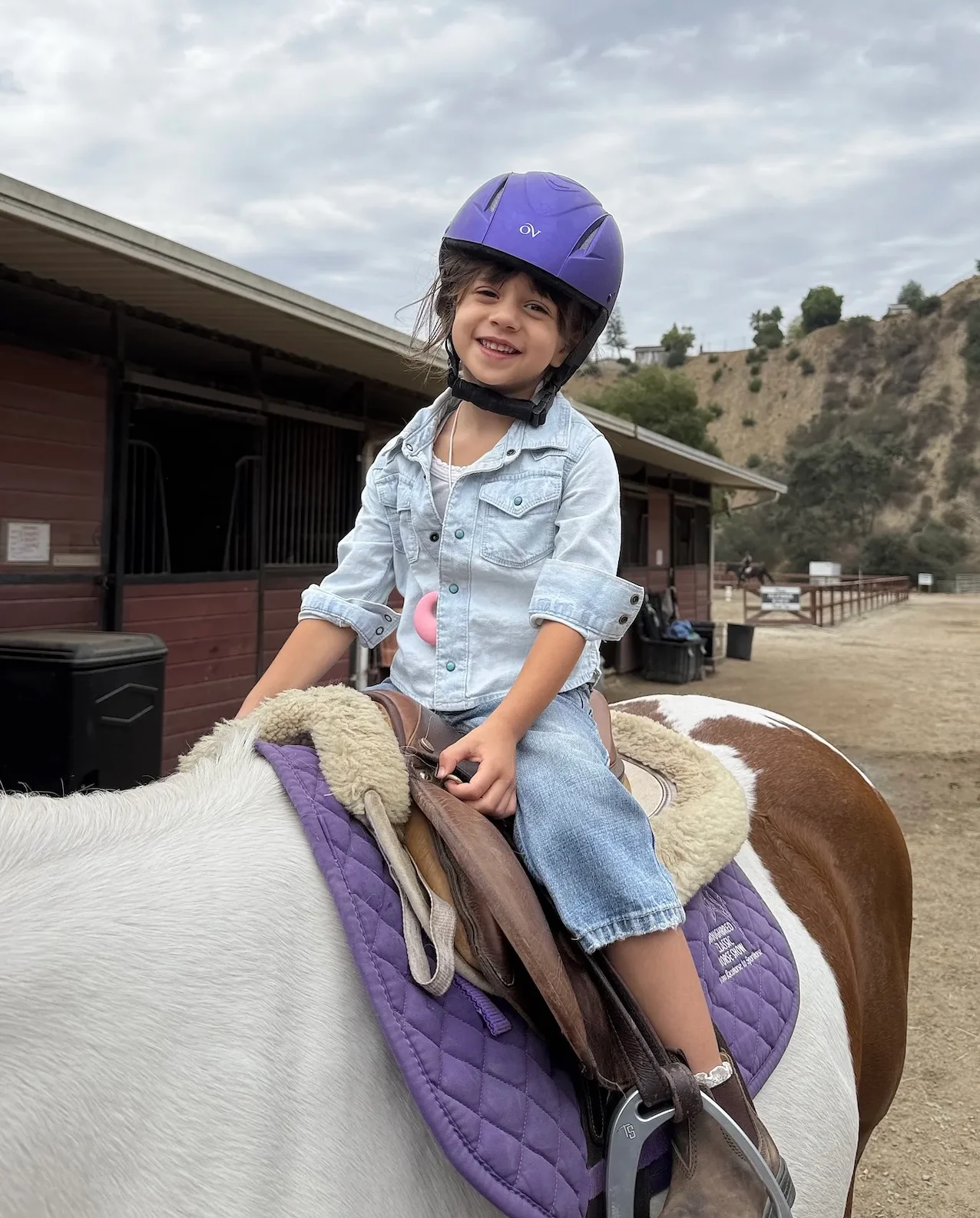
There are people who believe autism shouldn’t be fixed; that these children are born exactly as they should be. I agree with that — I’m not trying to change my daughter’s frequency or dull her magic. Her brain should be studied for its beauty. But she cannot tell me she needs to go to the bathroom. She can’t tell me she’s hungry, thirsty, or in pain. She can’t communicate her needs, and I can see the exhaustion and frustration in her eyes. It comes out as aggression, regression, sleep disruption, and brain fog. That is not joy. That is suffering. I’m not trying to ‘fix’ her. I’m trying to give her tools to navigate the world, because I won’t be with her forever. And she deserves to exist in this life without me having to translate and navigate every moment for her.
I’m aware of how lucky I am. I’m crying as I write this because so many parents are living through unsurvivable things, and I have a healthy, beautiful child right in front of me. But multiple things can be true at once, and it is hard that she’s almost five and has never said “Mommy.” She has no sense of danger and will run into traffic if I let go of her hand. She’ll put a knife in her mouth; she’ll swallow rocks. Her younger brother, Carlo, will follow me and answer when I call him. Carmela is lightyears from that. Every single day of my life, I am ON.
The juxtaposition of Carmela and Carlo is something I don’t have words for. There’s no way to describe the experience of parenting one neurotypical child and one neurodivergent one. But I will say there are moments where I almost feel angry about everything Carlo can do. Not at him, never at him, but at the distance between what comes so easily to him and costs Carmela everything. He loves her. He pines for her. He washes her hair, knocks her over with hugs. She tolerates him — mostly pushes him away. When Carmela locks eyes with you, you feel as if you’re the only person in the world. But having a son who is so affectionate and a daughter who can’t hug is just…an experience.
Our private world and the real world are two different places, and I live in both of them simultaneously. At home, we sing and dance and do our thing, and then we enter the real world and it’s “why won’t she talk,” or I’m sending emails to entire classrooms explaining that she won’t hurt anyone, or I’m screaming her name at the pool while another parent jumps in to pull her out.
That’s where the mourning comes in. Every parent has to release some version of the life they imagined, but, for me, it sometimes feels like everything: Ballet. Cooking together. Painting. Movies. Talking to each other. Every dream I had for us, and for her, I’ve had to grieve, quietly, without a funeral. Carmela is one of the most magnificent creatures I have ever known. But the work of reaching her, of gently pulling her into a world not built for her, is slow.
I am over the moon just being around her. I am gutted. I am living a life full of genuine joy, and then I’ll be alone in my car and, out of nowhere, I’ll scream. There’s a constant chorus of people saying, “She’s going to be great. It’ll be fine.” And there’s the possibility that this is her, and always will be. That I may never have a real conversation with my daughter. I am learning, slowly and imperfectly, to hold that truth without falling apart. Some days I can. Some days I can’t. The fear lives alongside the acceptance, and always will. On the day I die, my final thought will be: What happens to her when I’m gone?
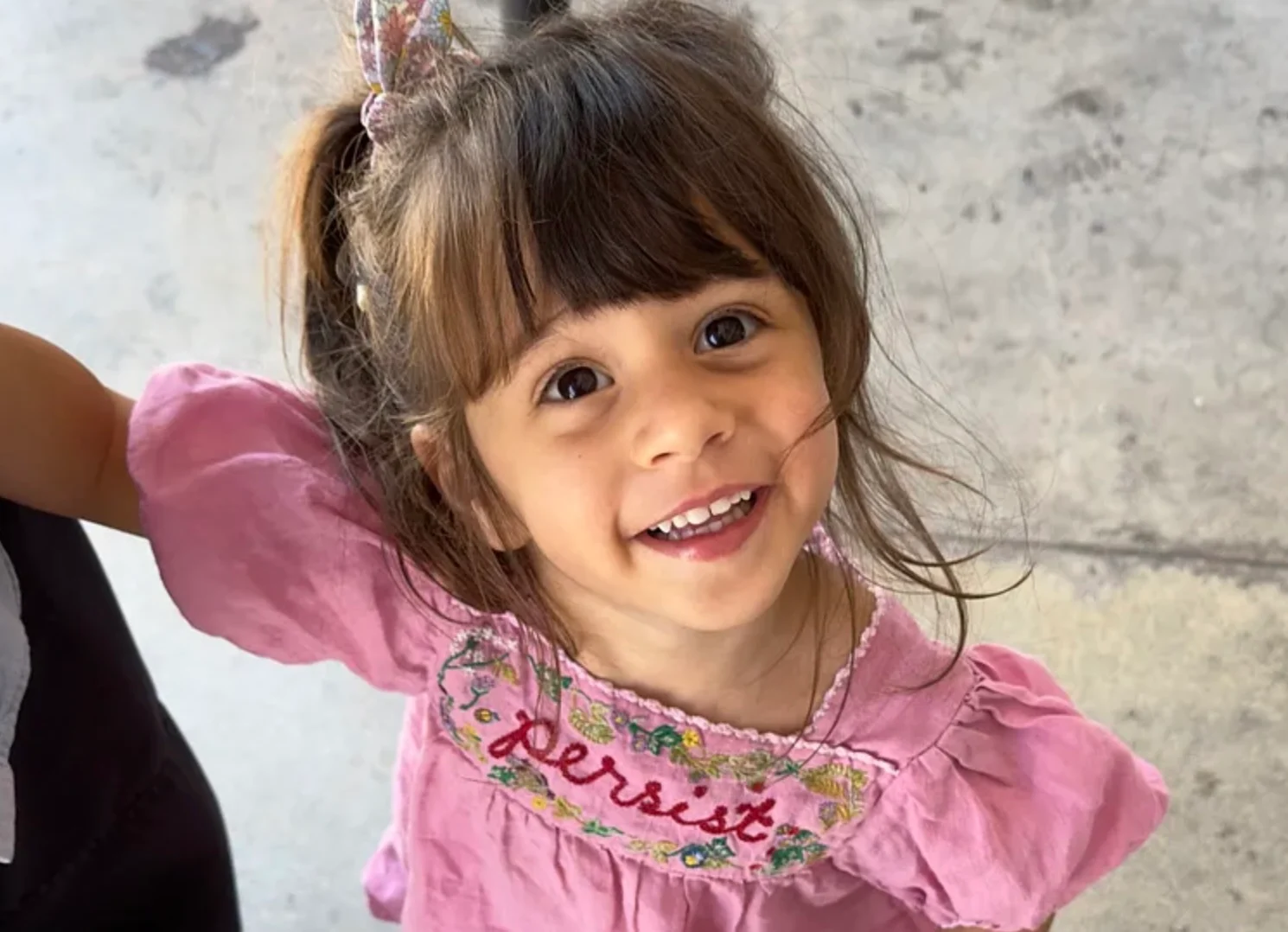
This is autism awareness month. This is what I want you to be aware of.
Pia Baroncini is the creative director of LPA and co-host of the podcast Everything is the Best. You can follow her on Substack, if you’d like.
P.S. What disability taught me about parenting, and what it feels like to have autism.
(Photos courtesy of Pia Baroncini. This post first appeared on Pia Baroncini’s newsletter; this essay, which has been edited/condensed for length, is being published here with Pia’s permission.)
Tags: disability
Comments
94 commentsYour daughter is absolutely beautiful and perfect how she is. She will learn and grow on her own timeline. I was reminded not so long ago to quit focusing on the ‘what can’t she do?” and start focusing on the ” What can she do?” You build on the little things. Celebrate the wins and encourage gently for her to try for more. For example if she can take 3 steps by herself, encourage 4 but don’t get upset with her when she doesn’t get it, celebrate like it was the day she was born when she gets it. The same goes for speech if she picks up one part of a word encourage the next part. What you will find out is you will be less stressed and more able to join the two worlds together, maybe not the same way you do with Carlo but in a way that is just as beautiful. A butterfly spreading its beautiful wings for all to see. Autism comes in many shapes and forms from verbal to non verbal to they don’t act noticeably autistic but they are just the same. It isn’t fair that the world expects them to fit in a box they don’t, we as the caregivers and those who love them best can’t expect them to fit in that box either, but what we can do is build the box in the world they can fit in and invite the world in. Dance and sing in the middle of a grocery aisle if that mood strikes you guys and never be embarrassed or sorry for it. Should anyone say anything, tell them you are taking a moment to celebrate the wonderful life God gave you that day and at that moment then invite them to join in. Finally find a good support group for parents of children with autism. If you can’t find one let me know and we can start our own. Our children are just the same as any others just different in their abilities. Helen Keller couldn’t see or hear and look what she accomplished? God Bless and keep you.
Thank for sharing this story. I have a friend with autism and I think he is a gift from GOD. I thank GOD for him. He has a big heart, alot of times he thinks for others before himself. I just wished I had more friends that were as kind as him. I will alway be thankful to GOD that he has brought
There is so so so much love in this. Thanks for sharing your love with us.
Thank you for sharing this Pia. You expressed so many things my parents were never able to name but I know they experienced. Your fear of what will happen to her the day you die is so real. As the sibling to a brother with disabilities I wanted to say, we siblings pick up the mantle. Even at a young age I learned by watching and listening. And when the time comes, for me that time is now, we try our best to continue to provide our sibling with stability and continuity of care. The way you describe Carlo’s love for his sister is the way I felt towards my brother as a child. Still do! Sometimes it feels like the only way to share that bonds of love with my brother is by keeping his routine and provide the structure he relies on. He knows he is safe with me and that is our sibling love language. Thank you again for your openness. Sending you and all caregivers strength & tender love.
This is a beautiful comment. ♥️ My cousin has severe disabilities and I love him with all my heart. His sisters are incredible caretakers and will continue their parents’ care when the time comes.
Dear Pia, Thank you so much for your beautiful and touching essay. Our ND son is about to turn 16. His only developmental delay was at 18 months he was still not walking without holding on. His general pediatrician wasn’t alarmed but we were. We got appointment with children’s neurologist and in the meantime went to early intervention PT. Sure enough, in 5 weeks of PT DS had let go and was on track. Neurologist said “developmental delay” but nothing more. Then we saw a developmental pediatrician who affirmatively ruled out ASD. Next diagnoses were ADHD, “sensory processing disorder” based on the walking delay and sensitivities to noise, some low tone, and what teachers deemed inappropriate hugging; developmental coordination disorder based on extremely poor handwriting development, reading, math and writing disabilities. The turning point didn’t come until 4th grade, when he was due for a second neuropsychological and his lead teacher suggested he might have ASD. Sure enough, the second neuropsych affirmed ASD Level 1. Now finishing 10th grade, he is in public school with a case manager and an IEP and in an ASD Level 1 cohort where he’s fully mainstreamed with a “Resource” class primarily for supports with executive functioning. When he was your daughter’s age we had so many of the same feelings you express. Watching him progress on many levels we are grateful yet anxious for his future. Like you said, when we’re not around. His current thing, by the way, is that he’s “normal,” doesn’t need the supports in school (or at home) and were he evaluated today he would not receive the diagnosis. Some of this is adolescent pushback but not all and we strive to foster his independence but also to support his strengths and growth based on what he needs now and in the future not on what he wants now.
Thank you so much for not only writing this, Pia, but sharing it. I have sent it to many of my friends and family.
Such a beautiful, heartfelt, moving essay.
My wife has it too. She is fully functional and an exceptional medical provider according to her yearly reviews. It’s an adjustment for anyone who genuinely cares for people.
Thank you for this beautiful, raw, honest essay. We really need more perspectives like this in the world – that it’s possible for multiple things to be true at the same time. Gratitude and grief can exist side by side, and we’d all be better off and more loving to one another if our culture acknowledged that more widely. Your love for your daughter is so apparent.
Parent to Parent, Autism is challenging because it is unpredictable…until it’s not. Our child also has this label. I love that you use the word “magic”. It is like living with a fairy or an alien in human form. It’s been a long journey for us. We did not give and there are REALLY tough days. There are REALLY GREAT days. I would like to invite others to explore the 5 senses – we’ve been through multiple plans, doctors, etc. For our child, it was finding out a whole new vocabulary. There are senses that are TOO strong, so we tone those down (low light,blank walls, etc. – color is a trigger). Sound is calming, so we emphasize singing. sound bowls, other natural sounds. Our child cannot express in sentences her thoughts, but she can express in pictures, so we have a pad of paper and a pen at all times (NOTE: Pencil is not pen- learn “autistic”). The most brilliant part of autism is that these individuals are literally able to think outside of our mind boxes. The most challenging thing is that you need to learn to communicate with them – not the other way around. BTW, did you know: when you sing, you can’t panic. Singing requires diaphragm control, so you can’t do panicky breathing when you sing. Make sure you practice self-care if you’re a parent, guardian, or caregiver. These are big challenges.
I loved learning from your essay, Pia. About autism and grace.
Came her to say the same thing. I have knots in my stomach and throat. Tears in my eyes. This is such an important essay and I thank you for sharing it, Pia. Wishing you and your family the best there is.
So beautifully expressed – thank you for sharing your beautiful, thriving family. I am holding you in my heart and sending strength and fortitude and resilience! You’re incredible and we see you!
“Every parent has to release some version of the life they imagined, but, for me, it sometimes feels like everything: Ballet. Cooking together. Painting. Movies. Talking to each other. Every dream I had for us, and for her, I’ve had to grieve, quietly, without a funeral. Carmela is one of the most magnificent creatures I have ever known. But the work of reaching her, of gently pulling her into a world not built for her, is slow.” This reminded me of the “welcome to holland” essay about raising a child. Thank you so much for sharing Pia. I was excited to see your name!! Originally learned about you from my girl Heather McMahans podcast!
Thank you for sharing your family and your story with us. What a generous act.
What a beautiful child. And what a beautiful, profound, heartfelt love letter from mama to world about and for her child. I am so sorry for the grief, the loneliness, the labor of parenting you feel, Pia. From one mom to another, I want to be a part of the chorus that says: We see you. You are an amazing mama. Your feelings are valid. Don’t do this alone — lean on others, even if you need to teach them how to help you and your family. May life be full of joy and wonderful surprises ahead.
“I’ve gotten good at getting lost in the doing.” This is absolutely beautiful, thank you.
The unadulterated honesty of these feelings comes through so well in your text, Pia. I didn’t feel manipulated into thinking or feeling anything, and so I sit here with the full complexity of what you’ve written. Thank you for pulling this out of yourself. It is important to read and very beautiful because of that.
This is so beautifully written, as you delicately hold the beautiful and painful in your hands. I’m sure through your research and your journey you have found many others who can relate, but I would recommend looking up Katie Blackburn. She is a writer who is carrying many of the same burdens as you and loves to connect with fellow mamas. If you ever need a sounding board with someone who really gets it, you can find her on Substack. Sending hugs!
Thank you so so much for this essay. But also thank you COJ for making space and posting it. I’m also a mom with a toddler that has special needs. Social media and major websites like this don’t really go in depth discussing this experience. It can be quite lonely. So this essay means a lot, and seeing all the other positive comments is proof how much more is needed. All the love to all of the other hard working parents out there.
What a gorgeous little girl you have! Thank you for this beautiful essay that resonated on so many levels. It is also a reminder of how much impact our surroundings can have, because as you write, there is our private world and our real world. Our “real world” happens to be in Paris, and our trips abroad (especially in the UK, but also in the US) have felt almost like a relief of (better) understanding. But things are also changing: my daughter has been trying for over a year to help families with needs coming to Paris (although really she’s hoping for a chance to have tea together LOL), and just yesterday she realized that the staff at the Louvre recognized her lanyard! This was not the case even a year ago. I don’t know what actual impact awareness months can have, but seeing even the smallest moves towards understanding means a lot for my family. And if anyone is coming to Paris with their teen, please contact her for help or a conversation. :) https://www.instagram.com/autismfriendlyparis
I know this is not super relevant to the topic of the post but your daughter is so cute. My sister always says kids peak between the ages of 3-7. She loves that age range in all kids, not just her own children (she used to be a special education preschool teacher but now she’s a marriage and family therapist so she’s around a lot of kids). She’s adamant that our personalities, sense of humor, creativity, playfulness, make up skills, fashion sense, and so on all peak in that age range. And she has stuck to this belief for 20+ years. I tell her I disagree and that every age has its joys, but your pictures are reminding me about what is so darn priceless and incomparable about this age. I hate to admit it but there might be a sliver (just a sliver!) of truth to her outrageous assertion. I’m sure these photos are fairly recent but these are pictures of the good old days. You’re living the good old days and my heart soars seeing her little hand grasping your arm, the baby-toothed smile below that button nose, the ruffle sock peaking out of her riding boot, and the way she has to tilt her head so far back to look up at the person taking her picture because she’s still so tiny.
Wow. I am so appreciative to you for allowing me a glimpse into your world with this beautiful piece. I didn’t know, which feels terrible because there are many families similar to yours at our school. Despite trying to connect with many parents, I just never knew about this in this way. Thank you for opening my eyes to what it’s like. I wish you so many beautiful moments with both your kids. Know that reading your experience is very powerful!!!!!!!
Thanks for this beautiful essay. My daughter also had SCN2A, in a different, more severe presentation. She passed away at age 3. She too was magnificent.
Emily, I am so sorry your daughter passed away. I can only imagine the immense gifts she possessed. May her memory be a blessing to you and her loved ones.
I am so sorry, Emily
Oh, Emily. If you’d like to share, I’d love to hear more about your daughter. ♥️
Thank you for sharing — both Pia and the commenters. This is so, so hard. I find having Autistic kids particularly challenging because even though I have so many experiences in common with other parents (e.g. always being on, etc.) the experiences our children have are so totally wide-ranging. I have three daughters who are Autistic. Because they are unusually bright, they were exceptional at masking and the older two weren’t diagnosed until high school. (Then we knew what to look for, so the youngest was diagnosed far younger.) They can — and do — make eye contact, but they are more comfortable when they don’t. They can — and do — talk about things other than their special interests, but it takes considerable effort. To most of our community, my children are perceived as neurotypical. People don’t see the challenges behind the scenes — sensory issues that leave them unable to get dressed, sleep issues that exacerbate anxiety, the tremendous effort it takes to navigate school (different social expectations in every class, overwhelming sensory experiences in hallways filled with kids), and how their efforts leave them little extra energy to participate in activities outside school. And when they see my children crying frequently (eldest) or retreating from conversation (middle) or yelling at peers (youngest), instead of seeing these as signs of dealing with the challenges of being Autistic, my kids were labeled overly sensitive (eldest), shy (middle), and “having something of a quick temper.” In reality, my children are wired in a unique way that truly affects everything they say and do. But so many providers (teachers, pediatricians, etc.) still think that someone Autistic has to be non-verbal or obsessed with trains that it took ages to figure out how they are wired and give them the tools to be their authentic selves while living in a neurotypical world. This has been so isolating for so long. Thanks for letting me share my story.
Pia, what a beautiful essay and beautiful daughter. You are a great mom to your sweet girl. I have so many feelings reading this post and comments. My brother, who is 55, was diagnosed with autism in 1973. It was an all but unknown diagnosis then. Growing up in the 80s and 90s, when I said he was autistic, people thought I said “artistic” because few had heard of it. I hear the arguments about what language to use- and it matters!. And whether aba is appropriate. And why people thought autism was a deficit. I think it’s a combination of , when we know better we do better, but also autism isn’t just one thing. My brother didn’t benefit from the kinds of early intervention we know about now though he had teachers who were loving and well informed for the 70s! But his disability is profound and his quality of life isn’t what my parents wished for him at birth, though he has an incredibly dedicated care team. He is a funny, interesting person but he can’t speak or take care of most of his own needs and needs full time care. At the same time we are going through the evaluation for my ND son. And if his diagnosis is autism, it will be a whole different world than my brother. Mine is a wild kid (in the best way) who has a hard time with school expectations and big feelings at home but he will be able to navigate the world as he grows, he’ll just need different support. And I’ll be grateful to know that and support him in it. So I guess just to say, all of this can be true. Autism is a super power for many. But it can also represent a huge loss when it comes with major disability for an individual. We’re all learning (definitely me too!) And I think it’s very different to be a parent of an autistic kid, a sibling, or an autistic person. So im appreciative of the different perspectives here. Sending love to all.
Thank you for your beautiful words. I too have a daughter with autism. She is 15 now and it’s such a lonely experience. Our social circle is very limited. I get tired of people asking me about my other 2 kids and not her. If I do bring up that she’s in special Olympics track and a dance class the response is usually, “awe that’s great!” She’s almost treated like a puppy. However, I’m absolutely in love with my beautiful girl. She brings so much joy to our family. I would love more people to know her like we do, but they have to put in more effort and most won’t.
Thank you for sharing. I am aware of your story with Carmella, and I always admire the way you speak about her and her diagnosis – with so much kindness and love, while also so well portraying the complexity of the situation. This piece made me think of my friend who has an older daughter with ASD diagnosis and a younger daughter who is neurotypical – thank you for your insight.
This is a good read I chanced upon today after a busy week. Also, i didn’t know it is Autism month. But I thought I’d post it here should anyone be interested in donating. As I chose to raise fund for Austism Australia. https://runawaysydneyhalf2026.grassrootz.com/aspect/running-for-autism-spectrum-australia I personally know one person whose kid has autism and while I can never say I understand what she’s going through, I feel the unspoken struggle during conversations. It’s tough for sure. Sending virtual hugs to every parents out there! Our vulnerability is in fact our strength!
I’m an autistic adult, in my 30s now, and I see my childhood self in much of what’s described here. (It’s a strange feeling, like you’re a ghost in a room where people are talking about you!) I’m not any less autistic now than I was then, but I’m doing so much better with more control over my life and more people who take my needs seriously. My parents were loving and wanted the best for me, but their desire for me to participate in the world “normally” unfortunately led to harm I’ve spent a long time undoing. In addition to posts like these from parents sharing their experiences, I encourage folks to seek out autistic voices, especially including nonspeaking autistic self-advocates. I personally don’t post about my life publicly, but if any of the parents in this comment section want to talk to an autistic adult 1:1 I’m willing to connect over email.
Thank you so much for this comment, Cat!
We would love to feature more posts about autism, and you might enjoy these posts from women with autism, as well: https://cupofjo.com/2022/04/21/autism-diagnosis-as-adult-woman/ https://cupofjo.com/2020/12/01/what-autism-feels-like/ https://cupofjo.com/2024/10/08/five-things-i-noticed-at-a-nyc-bookstore/ Thank you!!
Hi Cat! Parent of an autistic 6 year old boy. I would love to connect with you over email! That is such a generous offer of your time and energy!!
Hi Mary, feel free to email me at caatamaraa at gmail dot com!
Another autistic adult woman here (late diagnosed), and like you I see so much of my childhood self here. Despite the privilege of being low support needs, I agree wholeheartedly with the harm done by trying to live “normally.” I developed a dissociative disorder to deal with the unknown trauma and pain I was feeling every day starting from childhood. In many ways, it is harder to live with that than the symptoms of my autism.
This is so well put! The feeling of being a ghost in the room while people are talking about you was such a core experience, and then people were surprised when I didn’t bother trying to communicate with people who wouldn’t communicate with me anyway, and saw communicating with them as optional, the same way they treated me. Another thing I’ve remembered lately is where my early confusion with sarcasm came from, because authorities in my life would say things that they fully meant to me in a way that all of their peers understood as ‘sarcastic’, often specifically about the violence that I would later experience from them. So my initial learning of people describing ‘sarcasm’ was situations in which what was being told to me was deadly serious!
Thank you for sharing your experience and all its complexity with such honesty and beauty and heart. Carmela and Carlo are lucky to have you.
This is so well written. My son with autism is almost 20 and yet our stories are so much the same. Your description of processing those early days privately and then you and your husband crying in the car after the diagnosis at age two – brought me back to those same exact feelings from all those years ago. My husband and I also cried together in our car, and then he did too. And yes, isn’t it so amazing how in tune these kiddos are to our emotions? His brother is two years older, and you’re right – There’s no way to describe the experience of parenting one neurotypical child and one neurodivergent one. I’ve learned never to take for granted the things my older son can just “do” because I’ve seen how these things are not just a given. My older son is graduating college in a few weeks and has a job and will be moving to his own apartment in another city. While it makes me so sad – it also makes me SOOOO happy because I know I could only dream about that for my other son. It’s a roller coaster for sure and there will be times when you throw yourself into therapies and treatments and other times when you just know that both you and your kiddo need a little break. And that’s ok. I used to think the goal was to “fix” “cure” … that was the language used 15-20 years ago. Now I realize the goal is to love and to make him happy and comfortable and able to communicate the things he needs and wants and to find the simple joys that put a smile on his face. I will say that even though there have been many many days where I have asked WHY, or cried or felt completely overwhelmed or incapable, there has also been so many moments of great joy and celebration for things that I think many people/families take for granted. And the people we have met on this journey … they have restored my faith in humanity and in the future. The kind, loving, patient teachers, therapists, doctors, friends that have come into our lives because of my son has truly been the biggest blessing. I pray for this for you and your family.
Also so beautifully written.
This is so very powerful. Thank you for sharing.
There is such beauty in your words and you can feel the love you have through them. Thank you so much for sharing them with us.
Beautiful girl and mom 🩷
This is such a beautiful essay filled with so much heart. Thank you for sharing, Pia. I have a daughter with Type One Diabetes – I wrote this poem to try and capture the rollercoaster of feelings I have being a parent. Sending love. Shining Star It’s been four years Since she diverged From an apple a day To a dying pancreas, From a naturally occurring hormone, To a synthetic life sentence. Four years of being one type of person Whose body slowly broke Only to be saved by big pharma And a disunited health group. It is not all bad, I say. She is a bright shining star Who wades through the glucose roller coaster Teaching us a lesson on resilience. Her pump is beeping now, Alert, alert, alert. And so I put away the thought That it’s not me who needs to dose, But our beautiful daughter Dead pancreas, beating heart. Our bright shining star.
Oh, my heart, Sage. So beautiful. Thank you for sharing this piece of you and your sweet girl.
We are about to embark on the diagnosis process for our kiddo. I love this video from autistic actress Chloe Hayden: https://www.facebook.com/watch/?v=1934360697104998
Thank you for sharing. You express yourself so beautifully – your love and your grief are palpable. What a tremendous mother you are.
This is so beautiful and truthful. Thank you for taking the time to tell your story. I have the honor of working with children and young adults with Autism, and I am continually bowled over by how amazing they are, and how incredible their parents are, and how hard they all work. Parents are so often doing this work on their own. I appreciated your line about gently pulling her into a world not built for her. I hope we can work toward building this world for everyone, so we can all be seen and we can all participate in our own ways.
I’m an SLP in a small school district and I work with kids from one end of the autism spectrum alllll the way to the other. Working with these precious kids is my joy and my privilege. Because I get to work with them across grade levels, I see, celebrate, and rejoice in the growth! So blessed to see the positive change over time. Parents, please know that I am loving on your kids so hard when they are with me. But then the school day ends and we all go home; me, to a quiet house, my kids to the struggles that happen after the transition home after a long day at school. Parents, you will never know how much respect, honor, and LOVE I have for you. Thank you, thank you for all you have done, are doing, and will do for your precious kids. You are an inspiration.
Thank you so much for writing this. I learned a lot, especiallly what NOT to say to a parent of a ND child. Our granddaughter has Lissencephaly, meaning her brain is smooth (no convolutions). She has never walked or talked. Cassie is now 30 years old, which is truly amazing—her Mom, our daughter, is an activist and (we think) a saint… She has always maintained a positive attitude.
Thank you so much for sharing – I feel seen. A lot of parenting content is not for me as a medically complex mom. But large parts of my experience were reflected in what you wrote. Thank you for your vulnerability here.
This is such a beautiful and heart-wrenching essay. It puts into words so much of what is indescribable about being a parent- the staggering joy and sorrow and hope (and sometimes, loss of it). Thank you for sharing this.
This was so powerful. Thank you for sharing. We have a friend whose child has a similar autism diagnosis. To this community – how can we support him? What are the best things we can say and do? Are there things people said that were especially helpful?
There will be different responses for different families. My best relationships are with other parents of ND kids or other parents who talk a limited amount about their own kids (or don’t have kids) and we bond over other things. Take an interest in the child, ask what they like, listen and just don’t offer advice.
I have a son with severe autism, who was non-verbal for many years. My friends who just accepted him and weren’t put off or embarrassed by him were the best. As a parent, sometimes it’s nice to vent about the struggles of raising a handicapped child to a friend, but sometimes it’s better to have in depth adult conversations about something entirely different. It’s easy to feel like one child’s limitations are all you ever think about, and that is exhausting.
I have 2 neurodivergent kids, and one them is likely on the autism spectrum. We haven’t had him tested because I feel extremely wary with the current administration. It is So. Freaking. Hard. The screaming meltdowns, the hitting, neber being able to find his shoes, asking 36 times to take his medicine, the people around us staring, the psychiatry, the OT…I am exhausted. Our other neurodivergent kid just tested in the 99th percentile on a cognitive assessment which is great, but I am not smart enough to keep up with this kid. And he’s having panic attacks at school and sleeping 7 hours a night. Is it summer yet???
Omg, this is my kid! So smart, and yet it is like he moves through life without skin, just raw to everything. It took a long time to get his diagnosis, and we felt so demoralized along the way. He was diagnosed six months ago (at age 8) and with meds, a good teacher, and supports at school he is doing much better (the days are still tough and unpredictable, but no longer as dark as they were – he is making friends!!!). I also had reservations about diagnosing during this admin but at the end of the day we needed the help that came we with his diagnosis.
This essay is aching and gorgeous. Thank you for sharing these words with us.
Thank you for sharing this.
Thank you so much for this. As the mama of a 12yo boy on the autism spectrum, it’s so relatable and I always appreciate reading the perspectives of other parents who are in it, just to feel like we’re not alone. It can be so isolating especially when you’re constantly feeling like you have to explain behavior to other people who don’t get it. It’s exhausting and a lot and I totally hear you when you say “what happens when I’m gone.” Truly one of my biggest fears. Sending lots of love to you.
This post says everything I was going to say. My son is 15 and autistic but with lower support needs. Still, the worries for his future are real. We found an amazing attorney to set up our will and a special needs trust, which helps us sleep only slightly better at night. Also, just in case anyone has a child with developmental delays and needs help, we didn’t need to wait until 18 months to start Early Intervention. Maybe it varies by state? Our son started at 12 months when I noticed he didn’t really sit up on his own.
Pia, my heart goes out to you and your beautiful daughter. Your ability to put down in words your experience, that is different yet so similar to mine, has profoundly touched me. Your daughter is so lucky to be loved by such a strong and resilient mama. I’m sending you both so much love and light.
Oof! Reading this was so, so brutal. I hesitated to comment because I don’t want to invalidate anyone’s experience. However, as the mother of an autistic daughter who will be turning ten in July–and, as someone else in the comments pointed out, I use autistic rather than “with autism” or “has autism” because I believe in the importance of person-centred language–I have found that taking a strength rather than deficit-based approach has made an enormous difference. Our family has struggled with many of the same challenges other folks here have brought up, and yet. And yet! I marvel at her every single day. Any time I start feeling sorry for myself, wishing she could do this or that or be like this or like that, I remind myself that she would be a different child then. And I love the child I have! I never want to imagine my life without the amazing little human she is.
Agree with this! I think having an autistic kid has taught me to love the kids I have, right now, and not worry too much about what they’ll be like in the future. I can’t start worrying about which college he’ll go to when I have no idea how he’s going to fare in high school. But I love him right now and we’re together navigating this life, and that is enough.
Thank you Pia, what a gift to us all, for you to be able to explain your world and Carmela’s world so beautifully and fully. What i wish, that the world can bend, a bit, or a lot, to let Carmela have the very best life possible, and for you to be able to breathe a little, let down your vigilance just a little, and enjoy being a mom fully. Helping us all understand is a step towards that. I thought I understood what it was to be exhausted as a human. And then I cared for a child with a rare genetic condition. She too has autism, and can’t speak, can’t build muscle or digest well, has severe cognitive delays, eats dirt, rocks. Has the biggest smile and happiest shriek. She’s #5 of 6. And that look you described – her mom wears it too. I want the world to be a better and easier place for her mom, and her, too. You all deserve that. Thank you again 💓
One more thought for those who are parents, if you haven’t considered it already, please get all your paperwork in order- especially if your child is an only child. Get conservancy, wills/trusts/etc. done and keep them updated over time. That will be the biggest gift you can give them to ensure their future is steady and safe when you’re gone. -Momma of an autistic young adult
Crying while reading. Thank you for this beautiful piece.
Thank you, Pia, for sharing your story, and thank you, COJ, for amplifying the often “hidden” side of parenting a ND child. My older son is AuDHD and in middle school; his younger, NT brother is 4 years behind in elementary. It was SO eye-opening when younger started to eclipse his brother in social-emotional skills, as well as “simple” things like brushing his teeth without a 15-step process. Realizing, “Wow, this is what every other parent of classmates experienced. No wonder they have time for hobbies, babysitters, etc.!” It helped me fully realize how different and hard we had it, bringing sadness and also some relief that we weren’t crazy – it truly is a whole new level of difficult parenting. Considering’s Pia’s comments about Carlo, I would be very interested to hear from a NT adult who grew up with a ND sibling, esp if they are the younger one but needed to “age up” to support the family. I know my younger has already faced playground challenges on behalf of his older sibling – “Tell him to stop asking to play with us! He’s annoying!” It’s an added layer to navigating parenting a ND child. Now we also need to support his sibling in a new way that requires research, therapy, etc.
“There’s no way to describe the experience of parenting one neurotypical child and one neurodivergent one.” Just adding here that I’m also having the experience of parenting one NT and one ND child, and my younger child is also the NT one, and wow it has been a wild experience! I also didn’t know that 4 year olds could cross streets safely until my second child. That line in this piece made me cry as I felt so seen!
Exactly! I just sat in wonder as my NT toddler prepared his whole breakfast once (slicing banana, pouring cereal and milk). This year he’s planning a Mother’s Day surprise and I am so touched.
Thank you Pia and to the all the other commenters. I’m sitting here crying, because I can relate to so much of this as a mom of an AuDHD 10 year-old and neurotypical 6 year old. We are always on in a way that feels existentially exhausting and yet I keep so much of that hidden because aside from my friends who have neurodivergent kids of their own, no one gets it and it can be so lonely. But! I wanted to share a resource for NT siblings: https://siblingsupport.org/sibshops/. These are peer support groups for siblings of kids with disabilities and they come highly recommended. Our local group starts at first grade and I’m biding my time before I can enroll our daughter.
I was often thought of as the ‘normal’ one in my family, while my brothers were very classically ADHD, with all the usual behavioral issues. Turns out I am ADHD and autistic! So I got the experience of being thought of as NT all throughout childhood while finding out later that I was not. It was hard – I often felt like I had to live up to higher standards, that I was not allowed to struggle or make mistakes or be anything less than perfect. I was praised for being the “easy” child. It was a different era, to be sure, and there is more awareness for sibling support these days, thankfully.
Thank you for this beautiful piece. My 4 year old daughter lives with a rare neurogenetic condition called Angelman Syndrome. Because of her condition, she is still learning to walk independently, is non verbal, has seizures, and struggles with sleep. I can relate to most every word in this essay. It’s nice to feel connected to someone with similar joys and struggles.
Three decades into parenting two neurotypical sons and our autistic daughter. The exhaustion is real, as is the recurring grief that swamps me every so often for her milestones deferred or never to come. Know that you are not alone, though it often can feel that way. For us, over time, it changed, in a good way, and I hope that happens for your family, too.
Pia, I love to see you and your beautiful little chick in this space. I appreciate your hard-won ability to hold such deep duality in your heart of hearts. Our family lights a candle each night before bed and holds loved ones in our thoughts — we will hold you and yours tonight, wishing you simple joys, deep exhales, belly laughs, and the gift of being truly seen. I hope these comments buoy you in ways large and small.
Wow, this gave me chills and brought tears to my eyes. What a stunning way to hold space for a beautiful family navigating the joys and heartbreaks of life. Pia, thank you so much for this piece and for sharing this intimate piece of yourself.
Are you me? You wrote so eloquently what I’ve been experiencing for the past 19 years. I will tell you that some parts do get better. I don’t cry every day anymore. And my child continues to grow, progress and achieve things I never thought possible. But it’s so very hard. Hugs to you and all my fellow “A” moms.
Thank you for this beautifully honest piece! Sending solidarity from a parent a few decades into life with a neurodiverse kid. For me, the gift of other parents like us and other kids like ours sharing their stories has made all the difference. We are all out here doing this work together, even if some days it feels like we are alone in our little (exhausted, sweaty) bubbles with our kids. ♥️
This was such a beautiful essay. It brought me to tears. Thank you for sharing your experience with us.
Thank you, Pia for sharing your story. Very powerful. My daughter Nadine still speaks lovingly of Carmela from their time together in preschool two years ago. You’re an amazing mom and person and Carmela is amazing too. Love that smile!
Thank you for your beautiful, heartfelt words.
This is so human and so beautiful- a holding of both joy and pain together. I am grateful for the author’s absolute honesty. This is the type of writing that helps to change us all. Thank you so much for sharing.
“The more I push forward, the more appointments she has, the more I feel like we’re laying a path to help her.” Pia, I see you. One of my children suffers from PTSD which is has caused delayed milestones, behaviors that have painfully defined our family, and taken a “normalcy” from them and their siblings that I envisioned. Though our situations aren’t the same, I know your grief and deep loneliness. Hugs.
I am you, I know you, I see you. “Every single day of my life, I am ON.” I’m living this, too. Pia, thank you boatloads for talking about how you can both be despondent with grief about the life you thought you’d live and completely besotted with your child. My son has hypotonia and polymicrogyria, and he had a frontal lobectomy just before age 2. It’s a life I never imagined — just like we never believe the tornado could really hit *our* house — and the reality of the mental and physical load is impossible to convey to others. Writing about it helps me process (https://www.supportnow.org/lewis-laczko-family), and your writing has made me feel less alone. Thank you so much, Pia. You are doing everything just splendidly.
Mum of a kiddo with suspected (relatively mild – totally manageable if the adults involved are informed etc) ADHD, I did not expect to relate so hard to this! The constant need to bridge the gap between this incredible kid who has NOTHING wrong with them, and a world that wants everyone to be exactly the same. It’s so exhausting, and painful, and enraging when you see the judgment and incomprehension from others, especially professionals who should just know better… ex.haust.ing. And that’s with a much more minor case of neurodivergence, I’m just going through a tiny slice of what families with autism go through. It’s just unbelievable to me that we’re still, as a society, so resistant to difference.
This, this, this
What a beautiful little girl Carmella is, and what an important piece of writing. The author of this piece might be interested in the campaign in Ireland to secure housing and support for adult children with ND and intellectual disabilities – https://www.beforewedie.ie/
thank you❤️
Thank you for sharing your and Carmela’s story. She is beautiful and very lucky to have you as a Mom.
There is a podcast called “The Imperfects” where 2 brothers and their friend talk about and interview people from all over the place (usually better known people in Australia) about their journeys, challenges etc. One of the hosts, Hugh van Cuylenberg, also created “the resilience project” in schools since 2011. He and his wife have 3 children, one of them being autistic. He wrote an open letter to parents of NT children last year: https://www.youtube.com/watch?v=BET3dLqrQSY (Try not to watch this in the office. It will take space, time and calmness, and at least for me a lot of time to think about it.)
I follow Pia on Instagram and have for a long time. I read her essay about Carnella last week on Substack…I sobbed several times and saved it to read again. She writes so beautifully about the love she and her husband have for their special daughter, and the heartbreak and rewards and difficulties as well. I have a 17 year old grandson who is not autistic, but who has multiple issues to deal with. He is an absolute joy of a human and I feel such compassion and also awe for Pia and her family. Thank you Pia for sharing your story with us.