
My Wheelchair House
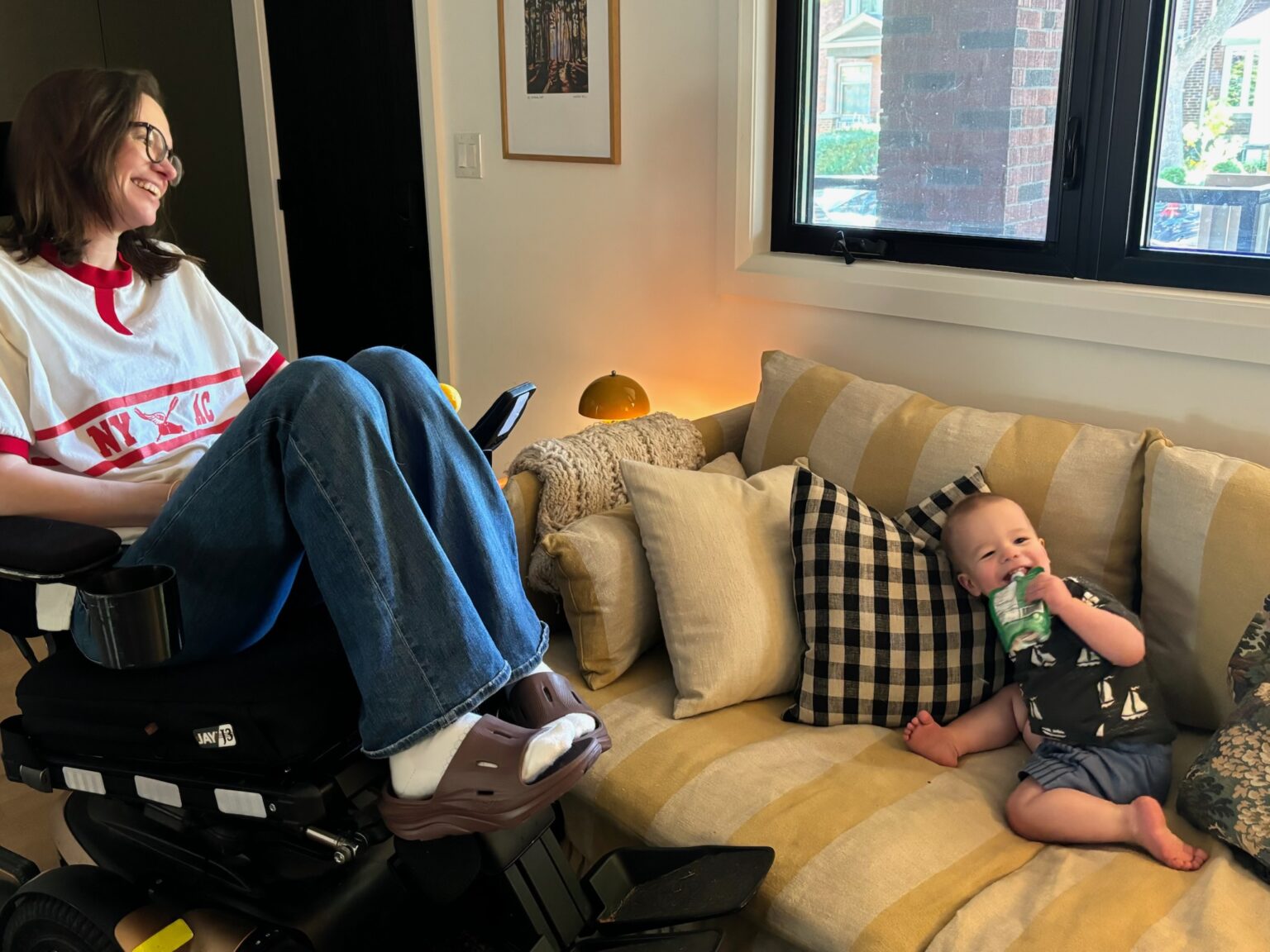
It’s post-nap. My 18-month-old son opens his dresser, takes out one shirt at a time, and places them around the room: a yellow shirt in the corner, the denim oxford on my knee, and a ringer tee on his head. Drawer emptied, I ask him to climb onto my lap, and he plants one dumpling foot on my wheelchair’s frame, then stretches his other up to the cushion behind my shins. He flops his belly on my legs, and I drag him into a sitting position. His 97th percentile-sized head rests against my chest, and he points around the room, counting to five for no reason.
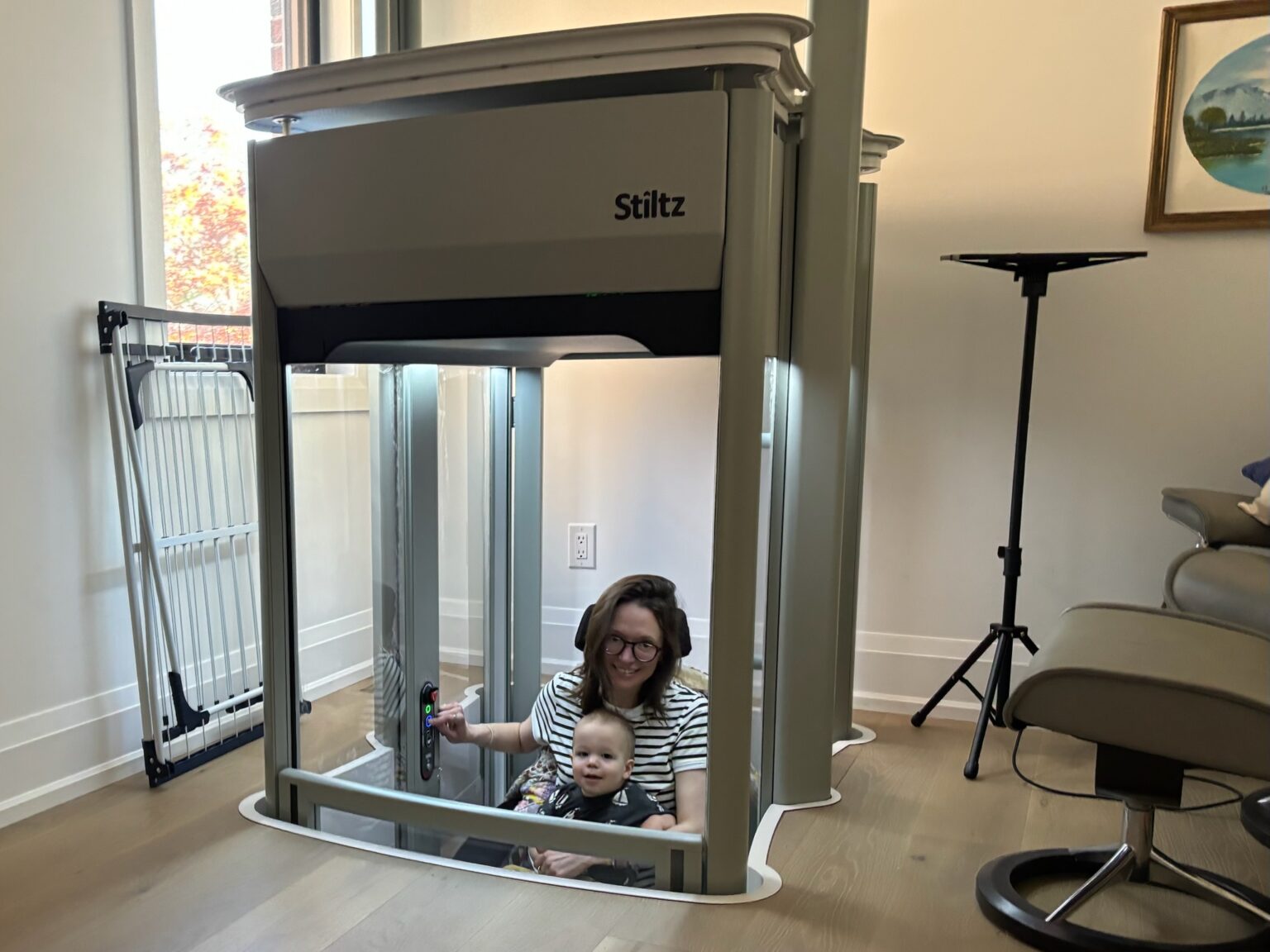
We roll down the hall together and into what we call “the elevator room,” which is also where I record podcast interviews. Our elevator is just large enough for my power wheelchair. I lean forward, swinging open the door, and we back in together. I stretch to close the door and use my right arm to stop him from pressing buttons while I hold the down button with my left. This style of residential elevator only moves while a rider is pressing the button.
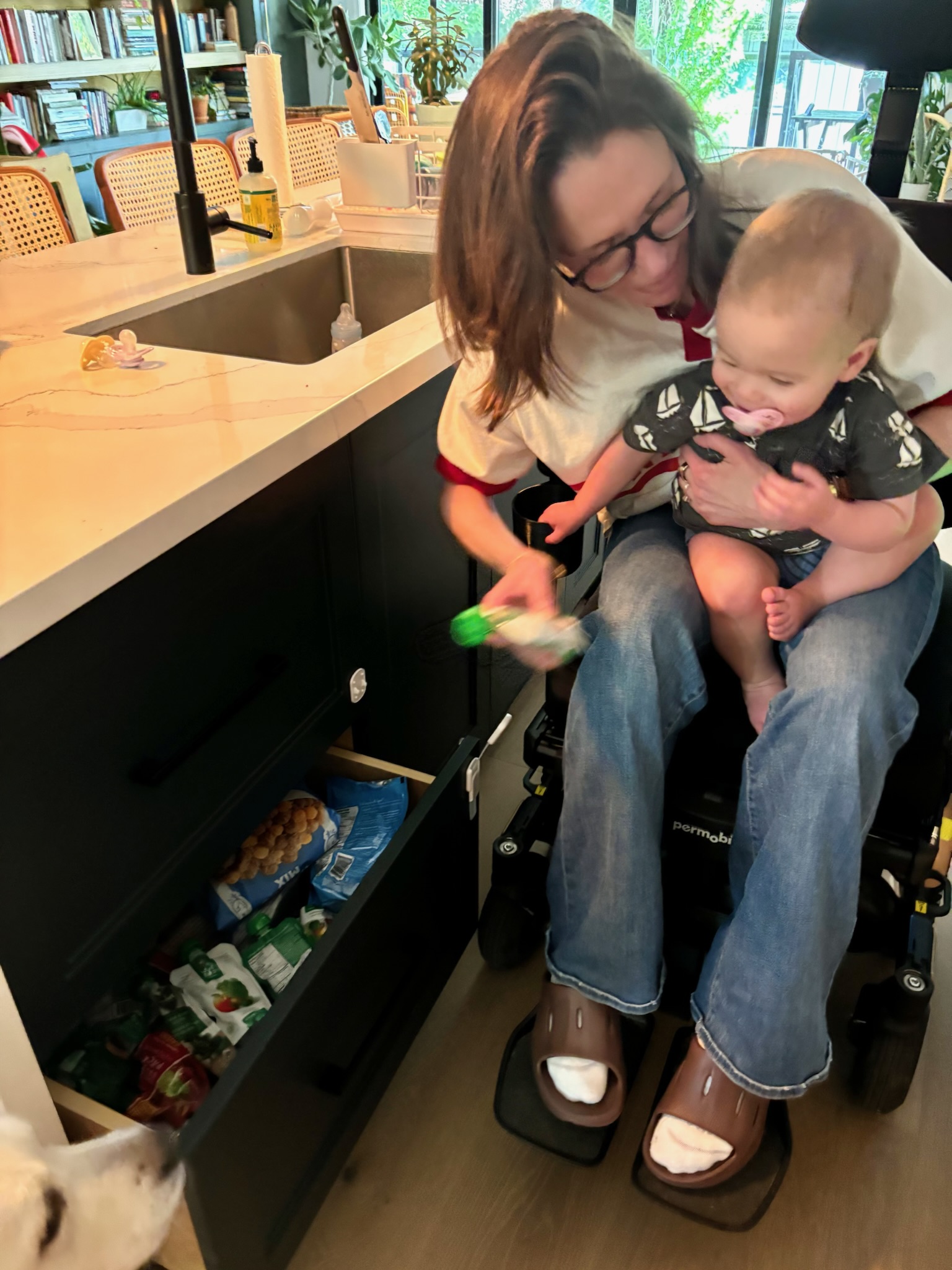
On the ground level, I use my footrests to nudge open the elevator door, and we enter the family room together. We go to the kitchen, fill his bottle with water, and grab a fruit pouch and granola bar. He arches slightly, to show he’s ready to dismount, and I shift my legs so he can slide down them like they’re a piece of playground equipment. I chase him with the snacks, and he flaps his arms, rejecting sustenance. “All done! All done! All done!” he chants.
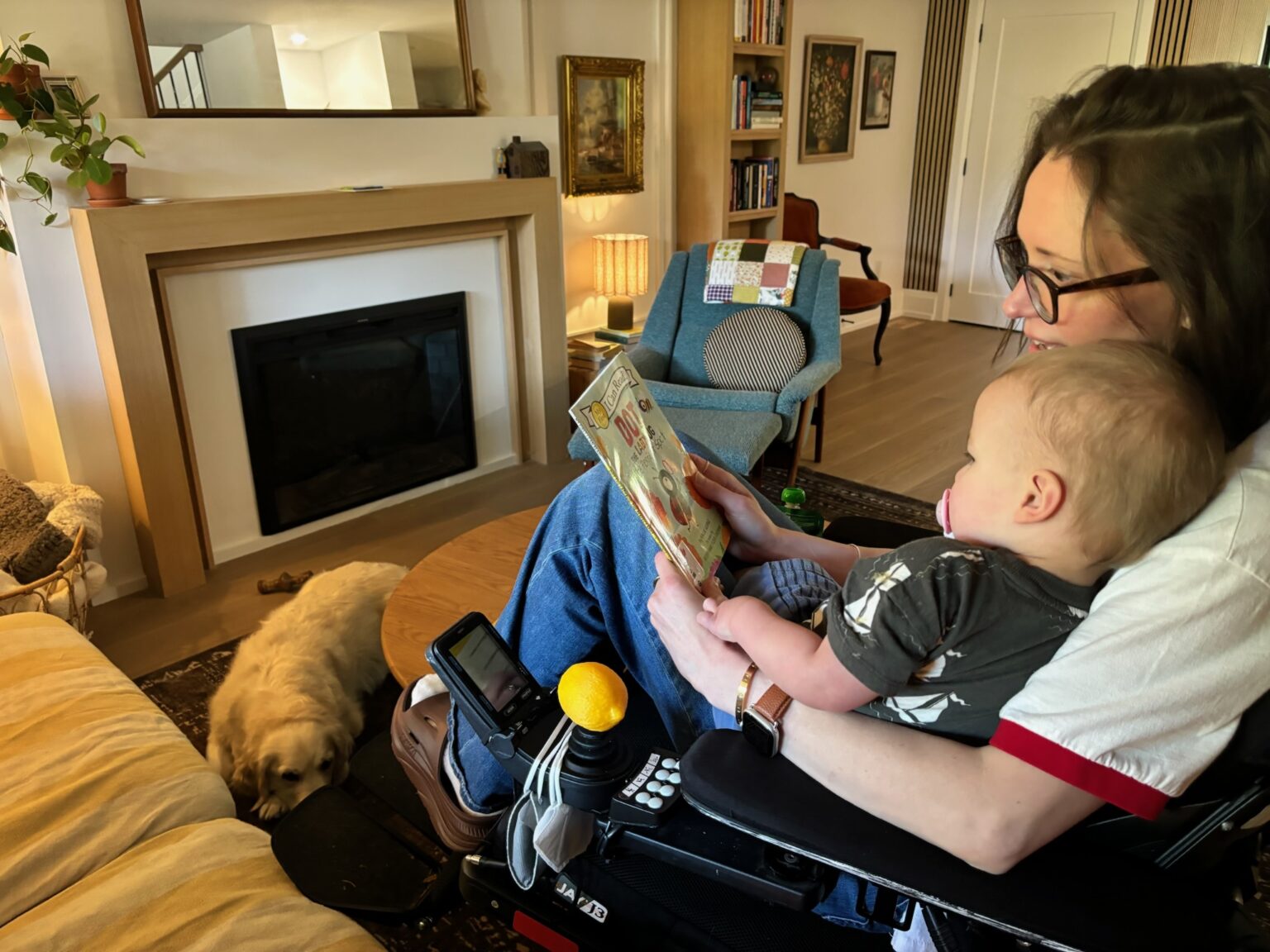
I watch as he organizes our books. Some on the sofa. Some on my lap. Some by the dog food. He refuses to put down Virginia Woolf. Yesterday it was Salinger. As he reaches for Omar El Akkad, Richard Powers lands hard on his kittenpaw toes. He freezes, stunned by the sensation. He turns to me, eyes welling. And then he’s screaming. I roll to him and lift him to my lap. Instead of facing out, he’s burrowed against me, wet face pressed into my chest. His right hand reaches around to hold my hair. His left hand pets my forearm. His breathing slows down, and I murmur to him, kissing his feather hair.
I’m not sure if you realize it, but this story is a miracle.
I have been disabled for 14 years. I have been living in a house that I can use for the past four months. I recently wrote for The Atlantic (gift link) about why it has been so hard to find accessible housing, and I won’t retell that story now. But the piece concluded with a scene from our life earlier this spring. My son fell and hit his head. He was fine, but because our house at that time didn’t have an elevator, I had to wait for my husband to bring him to me. I have missed so many moments in the nine years I’ve been a mom.
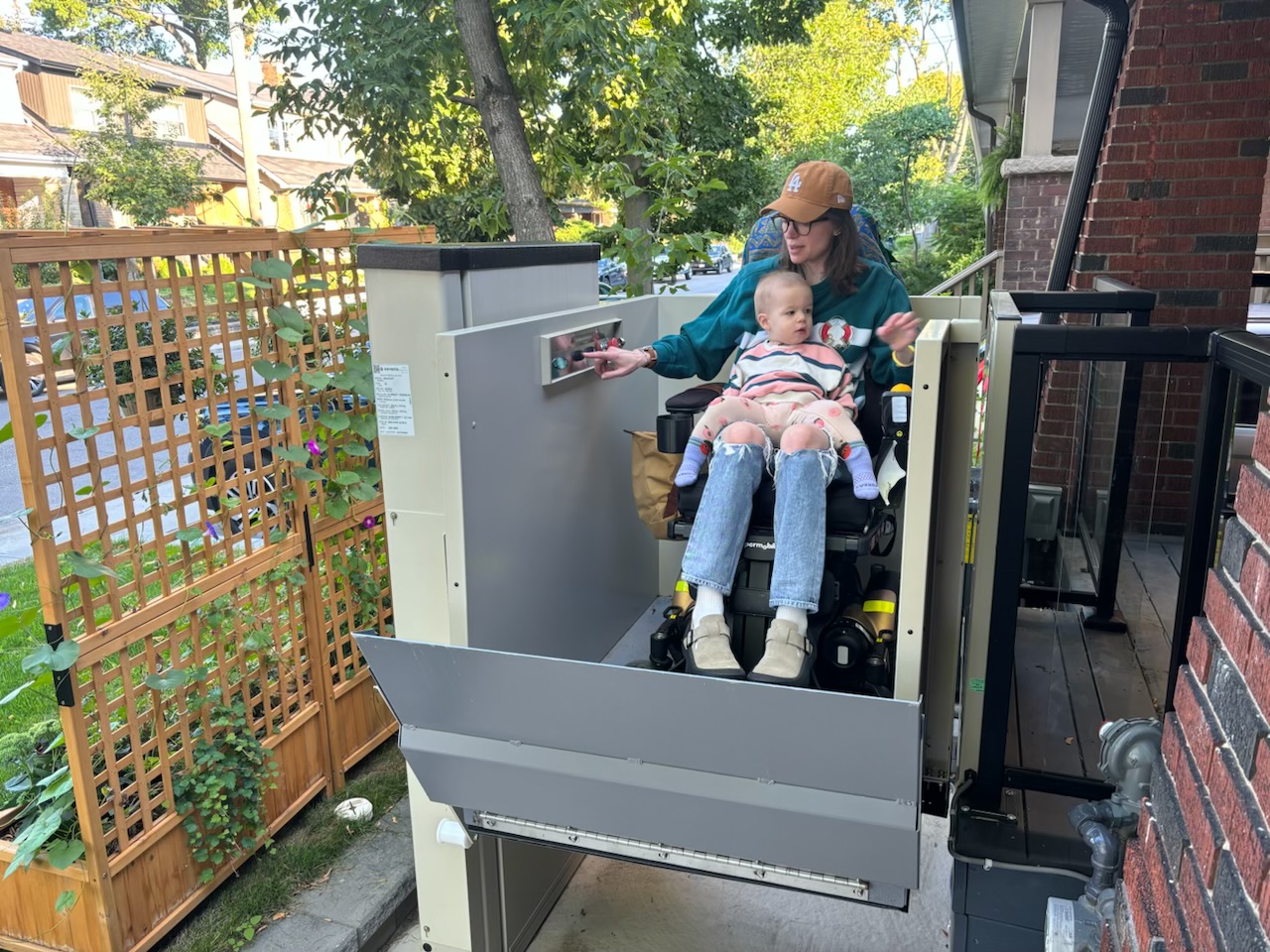
We now live in a century-old brick house in Toronto. The porch is bifurcated by a large metal device, called a VPL, that lifts me, in my wheelchair, from the yard to the front door of the house. It is an eyesore. It is loud. After we moved in, I purchased wooden trellises and planters, and hired someone in the neighborhood to add morning glories, green vines, and lavender to distract from the metal rectangle.
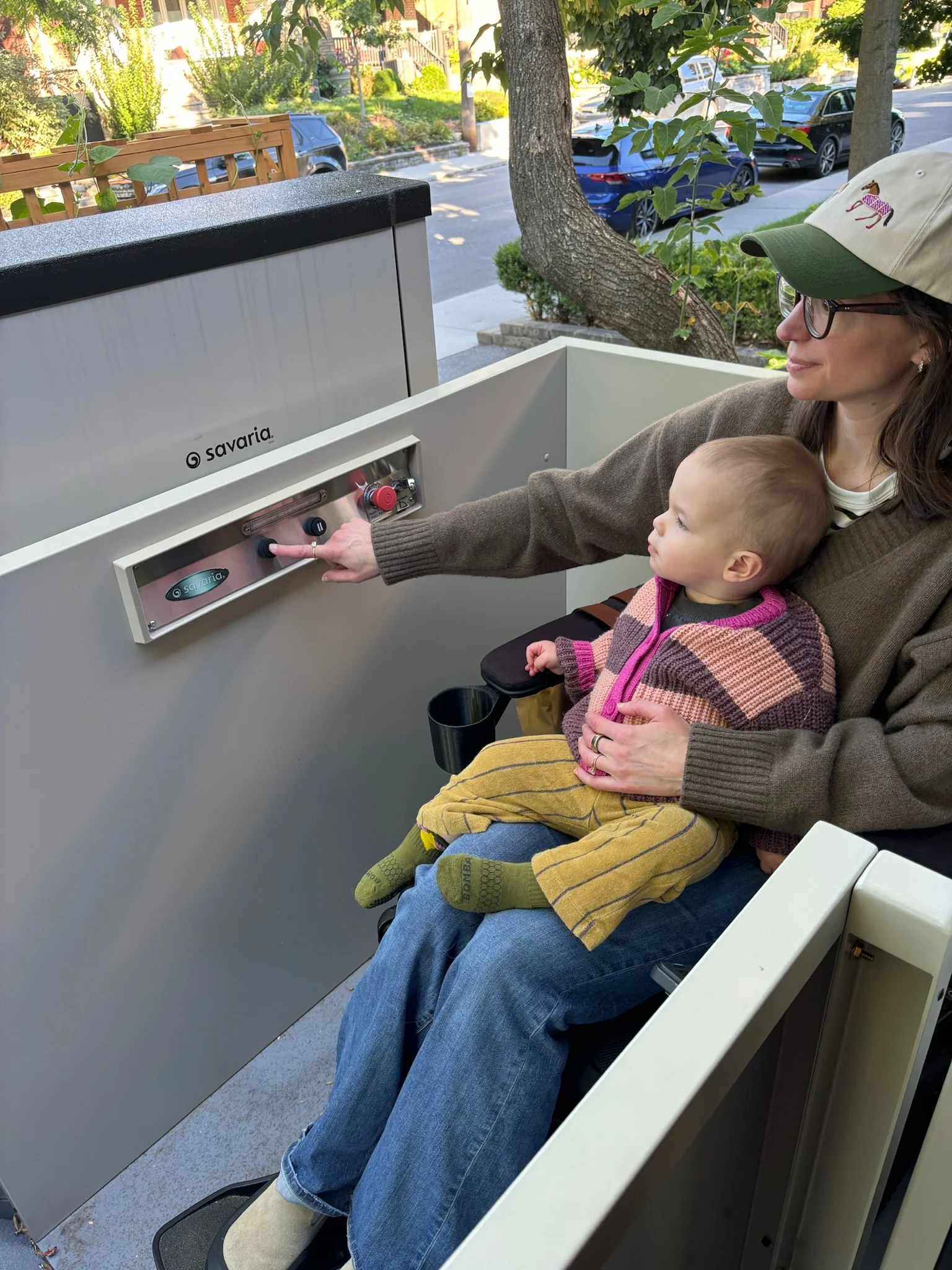
We bought the house in June and spent five weeks working with a fantastic contractor to make it wheelchair accessible. Now, a large elevator box juts into what used to be the dining room in the modestly-sized main level. The backyard used to have space for a swing set; now, it’s mostly a concrete pad and another lift, so I can reach the garage. What was once a guest bedroom is now just an elevator and chair. Sometimes I look around my house with its buttons and rods and grinding elevator gears and I feel ashamed. How dare I alter the entire architecture of a space? Just so I can make my own lunch? So I can wash my own sweaters? So I can be there when my baby drops a book on his toe?
What gall. The house is a physical insistence on my own dignity. The value of my desires. The worth of my presence.
The nature of my disability means that I was sick for years before I even considered accessibility at home. At first, it was because I didn’t have a diagnosis (POTS and EDS), and then because I thought I could get better. After that, I failed to consider that my specific brand of impairment required adaptation. I was sick for seven years before I got a power wheelchair.
An erroneous distinction between illness and disability means that people like me live in houses we can’t use. I can walk. When I stand up out of my chair, I don’t shake or limp. I look nondisabled. But what goes unseen is that after only a few seconds, my vision starts tunneling, and my skin becomes clammy. My hearing warps. That physical stress takes a toll. When we had a house with stairs, I could use them, but only once or twice a day.
I think that ableism and individualism and wellness culture can trick us into thinking that if we can sometimes stand, then the answer isn’t to adapt our environment so that we have to stand less, but instead, to adapt our bodies so we can learn to stand more. In the back (and front) of my mind, I believed that I could heal myself into the use of my own house.
Apart from that, there is the cost of renovation. We were lucky that we could do it (we had set aside money for years).
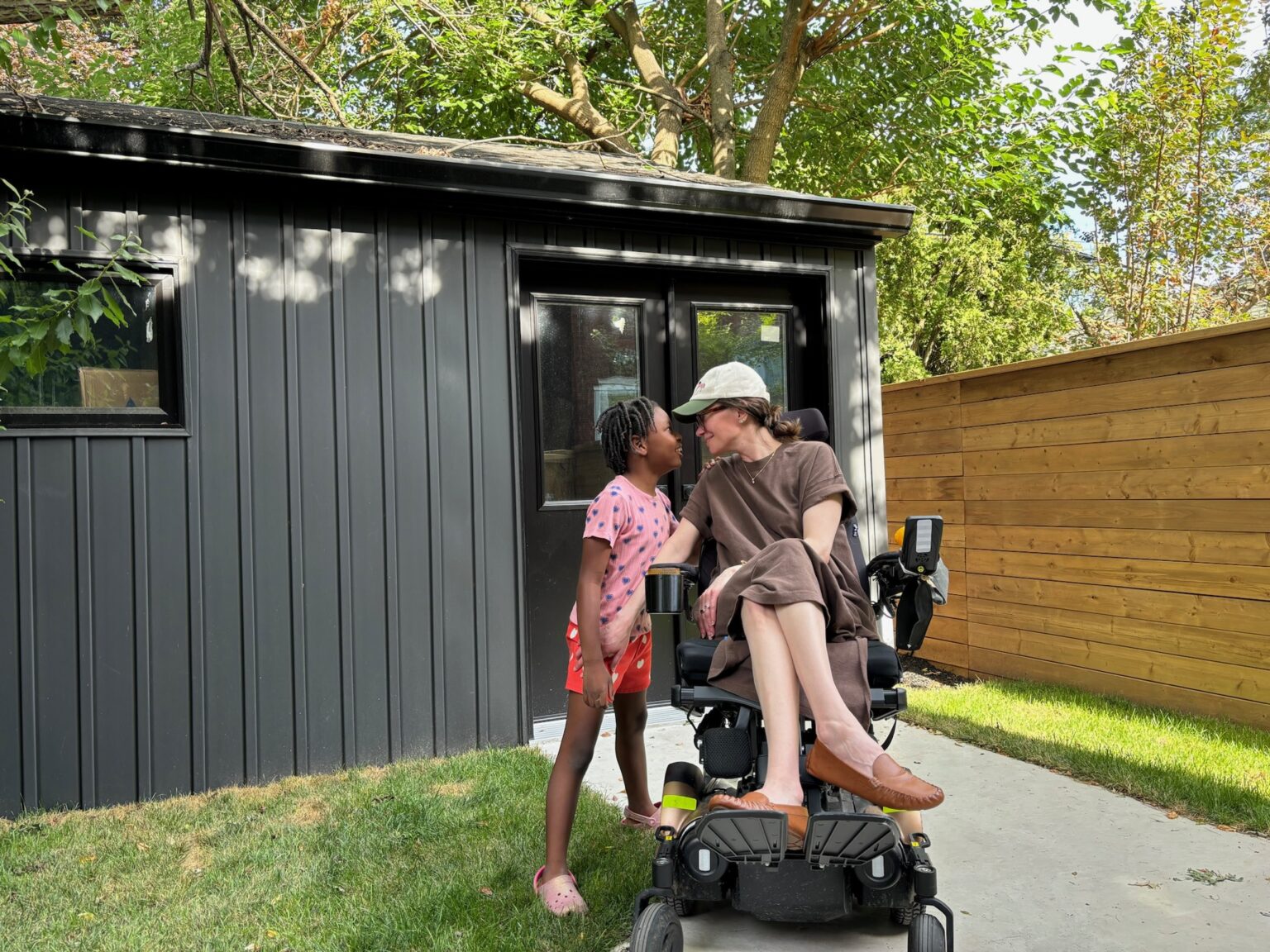
My daughter had camp last week. I’m dizzier in the mornings, so navigating the stairs in time to get her out the door before 9:00 a.m. was always impossible. For years, I did her hair in bed. I hugged her goodbye from my bedroom. But now, I’m waiting at the front door. Rushing her to do one last pee. Rolling around the family room looking for her visor. Making sure her water bottle isn’t leaking.
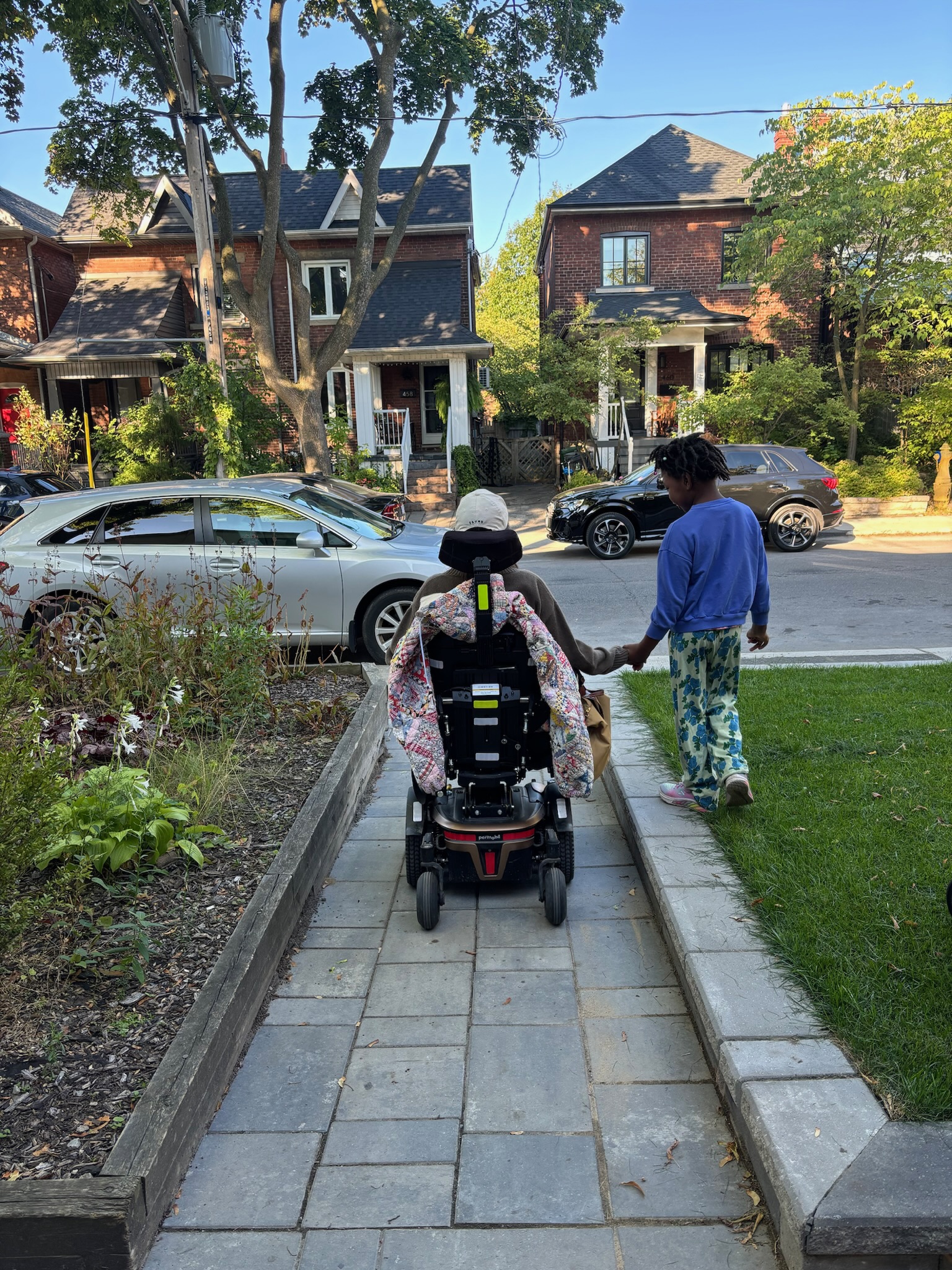
I’m holding her hand as we walk down the street, and she confesses that she thinks another camper wears a bra. We stop for coffee and a cookie. We share what we remember from the day baby F was born. “I can’t remember a life without him,” she tells me. When we get close to camp, she turns to face me. “Do you think everyone is going to be shocked to see you?” she asks. They aren’t. They don’t know that, thanks to metal gears and plastic doors and holes in the floor and concrete platforms, they are witnessing a miracle.
Jessica Slice is the author of Unfit Parent: A Disabled Mother Challenges an Inaccessible World. Her articles have also appeared in the New York Times, the Washington Post, and Glamour; and she wrote a post for Cup of Jo about what her disability has taught her about parenting. She lives in Toronto with her family.
P.S. More on disability, including dating while disabled and what it feels like to have autism.
Tags: disability
Comments
96 commentsThis is really nice and a lovely portrait of a family finally achieving accessibility in their house. We take this for granted; ten years ago I had a spinal cord injury and was paraplegic. (I still am, technically, but I am ambulatory again after some time in a wheelchair; I have never been more grateful to have a one-story house!)
I have EDS as well, but I live in Europe. So when I left my parents apartment, I moved to a ground floor apartment and when I needed an accessible kitchen and bathroom, a nurse came to my house, concluded that I indeed needed a more accessible house, and placed me on the waiting list. I only waited for a 2 bedroom house, because I was 28 at the time, and figured I might acquire a partner or a kid. Later, when I had that partner, we found out that my city does wheelchair apartments, but a lot of cities do not, (they often do care apartments, but I don’t meet the minimum requirements when I live in an accessible home) also because i’m disabled, financing is harder to get, so I’m happy I waited out, and have a place where I have all the adaptations I need. And also, not an indoor elevator, I prefer everything on the same level, so that when my kid falls over, I can get to here in seconds instead of minutes.
Oh Jessica, what a beautiful home, and family. I wasn’t prepared to see my condition portrayed here. I was diagnosed at 48 with hypermobile Ehlers-Danlos, then later with POTS and additional dysautomnia , and MCAS. My children were grown before I ever had a clue what was wrong with me. When you spoke about how you *can* walk, but the toll it takes…… yes. And the work you felt you should do to change your body to fit the world. I work so hard to build the muscle (muscle my body doesn’t easily build) to support my faulty joints, just to have less pain and maintain my mobility. I am terrified of looming disability, not only because of the change in my way of life, but because of the way our world looks at disability, at the cost, at the burden that will fall on my husband because we lack societal support. It doesn’t have to be this way. Thank you so much for shining a light on a life we’ll lived. I need all the how to I can get.
Oh I am so glad this found its way to you. And this all resonates with me. I feel like I’ll spend my life trying not to blame myself for the things that are hard for my body physically. And having illnesses like ours, where we _can_ push through but pay the price, makes it so much more complicated. So so glad you got a diagnosis.
Love that Jessica is back on CoJ!! Such a beautiful essay—the line about dignity is ringing in my head. I’m a fellow EDS-er (among other acronyms) and recently moved a bunch of my dishes to an open shelf near my dishwasher because the 2nd shelves of my cabinets are juuust high enough that my hip came out of place with each dish I put away. I’d been resisting it, telling myself I just needed better form—I’d worked with my OT and my PT—and reading more disability lit helped me finally say wow how about I make this daily thing much, much more accessible? My husband and I had already moved from a house with three floors into a first floor apartment to lessen the stairs I have to use every day, so I felt like that was all the accommodation I was allowed (this was in my head, if I’d said this to my husband he would immediately have moved all the dishes himself). But one day I though, what if it didn’t hurt to reach for a mug? And this simple thing-IT IS AMAZING. Thank you thank you Jessica, for helping me see this in the light of dignity.
hooray for moving your dishes!! Isn’t it wild how we think our bodies should change instead of our environment?
This was beautiful and a glimpse into your world: thank you. I have a family that looks a lot like yours, albeit older xx
Beautiful!
Thank you for sharing a story from a mother with a disability, and thank you to Jessica for sharing it. I interviewed women with disabilities, then and wrote research and advocacy materials to help improve healthcare and policies for women in my state (on behalf of a client). I learned so much through that process and learned even more through this blog. The more we know and understand, the more inclusive we can be as a society.
“I think that ableism and individualism and wellness culture can trick us into thinking that if we can sometimes stand, then the answer isn’t to adapt our environment so that we have to stand less, but instead, to adapt our bodies so we can learn to stand more.” This feels so accurate. Our 4 year old is disabled and uses a walker. We spend so much time and energy trying to help her walk independently more often. But perhaps a better approach is to embrace all the things her walker gives her the confidence and stability to do.
Wow, Beth. What a stunning takeaway. I spent years trying to be able to walk, and the switch to accepting the capacities I have was, in my case, life-giving. Your daughter is lucky to have you.
I loved your book unfit parent! I took so many screenshots and send it to family and friends. It’s a parenting book truly everyone should read and it’s helped me to question ableism and being a mother, what is really important. And to allow myself to rest.
I’m very flattered thinking about you taking screenshots. Thank you!
Like so many stories shared on Cup of Jo, this is beautiful.
The best truly aspirational content on the internet. Aspiring to a world where everyone can access the support they need to live their lives to the fullest.
I work in healthcare marketing. Your words are beautiful. The images that accompany your words tell their own story. This package is one of the best examples of healthcare storytelling I’ve seen this year. Going to share with others on our team – this sets the bar.
Thanks for sharing. This is beautiful.
Thank you so much for writing this. My husband lost the use of his arms and legs earlier this year, and we are still learning how to navigate the world and our new reality. It’s wonderful to see you and your family thriving in your home, and really helpful to see how you’ve made the built environment work for you rather than against you. Thank you again – your writing here has really helped us to consider new ways of navigating our space, as well as feel less alone.
I’m really glad it helped you feel less alone. Solidarity to your husband. The adjustment to disability can be very hard. But, in my experience, there is beauty waiting.
This was gorgeous and so thought-provoking. Jessica, your writing is stunning. Can’t wait to read your book!
I spent 6 months temporarily disabled while waiting for the surgery to restore most of my ability to move freely and it has utterly reshaped my sense of how we look after people with disabilities. This discussion of the grace of easier movement strikes just the tone. We must do better by one another more often for the good of us all.
Those do look like quite a functional power wheelchair and quite a functional elevator room, Jo.
I’m a PT (and another “Jessica”, hey!) working in rural Appalachia with all kinds of differently abled folks, though just about all elder humans. But I’ve started a business to help people age in place, at any age, so their homes can work for them in whatever way they need. I hope you were able to find healthcare professionals who could help you along the way and who will continue to advocate for you, your dignity, and your mobility as you live your life. Living in a safe and accessible home shouldn’t be a luxury. Thanks so much for sharing your story in all the ways you do. Looking forward to reading your book.
Thank you, Cup of Jo, for continuing to feature more stories about disabled people. This was a beautiful read as well as being enlightening.
Tthank you for sharing your story. Your imagery was vivid and sharing in your triumph brought a little joy to my day. I am sorry that it was so hard (and expensive) for you to get there.
Thank you so much for writing this. My sister has POTS and related health struggles and I’ve often approached her from the perspective of both pacing and supporting where she’s at with the biases of “she can heal” without the respect for the need and benefit of adaptation. Witnessing a full life you live that entails adaptation brought me a deeply needed reality check of the pressure, fatiguing “hope”, and ableism I still bring in my support of my sister, and understanding that I’m still centering my perspective and the health industries perspective on health versus her own experience. The pieces you’ve written have been clarifying, inspiring, and supportive. Thank you.
Wow. This is a stunning response and makes me so glad I write. Thank you for having an open mind. For a long time, I had the same thinking you’ve described. It was a revelation when I realized I could adjust my world to fit my body. I got a power wheelchair seven years into my illness, and it changed everything.
Thanks for the response Jessica… I’m really glad you write too. “adjust my world to fit my body”…so spot on. Thank you for sharing this wisdom.
Absolutely love this – it IS a miracle, but honestly shouldn’t be! This is 2025, we have the ability to build and renovate spaces to reflect the fact that we have made SO much progress on making it possible for people with disabilities to live full, rich lives in the community. This space is beautiful because of all it opens up for this family!!!
I am grateful that the author could afford these changes. The reality is that so many disabled (and who can neither stand up or walk or even move their legs/feet) live in apartments and homes that cannot be renovated to accommodate their needs. The toll on our lives is immeasurable. Imagine that you literally could not get through a doorway (interior or exterior). That you live in a multi-floor unit but have no way to get upstairs and, if you’re lucky, can convert a living room into a bedroom. Getting help is challenging as usable housing is generally unavailable or expensive and unaffordable by the average person (Insurance covers nothing in many cases, including needed wheelchairs, etc.) You literally cannot get around your home and use appliances, etc. You are often a prisoner. Even if you get out, the so called “accessible” bathrooms are a joke, starting with doorways that don’t accommodate many types of mobile chairs. Once inside, toilets are low and a bar on the side (that is fixed and does not swing out) is insufficient to aid most folks getting in/out of a chair and then being able to get up from the very low-riding toilet seats. Signs that say: Call if you need help in some venues are a joke. You could be sitting there for hours before anyone comes if you are there alone without help that you bring with you. People have no idea how challenging it is to have your life of independence gone due to health issues (Many times as side effects of treatment!) . Your life becomes extremely limited and you can often feel like a prisoner in your own residence. And if you don’t live in a single floor home or an apartment building with a working elevator? Well, good luck to you.
I’m wild about this story. You, your family, your words, your home, gosh. So much beauty.
Thank you so very much for sharing. My Dad has MS and was in a wheelchair for much of my childhood. As a kid, my family felt so different but stories like this make you feel less alone. Your home and family are beautiful!
Thank you so much for saying that! Disabled parents are so much more common than people realize.
Jessica, thank you for generously sharing your home and family with us! EDS runs very strongly in my family, from my mom (who also uses a wheelchair) to my daughter. Before my mom’s diagnosis I had not seen much about it at all; so thank you for bringing more awareness. You seem like a really fun mom. <3
What a very nice thing to say. I will remind my kids that I’m fun :)
I just love it when people are badass enough to give us a glimpse into their extraordinary lives.
What an incredible family. Incredible story. Incredible words. This line had me crying: “The house is a physical insistence on my own dignity. The value of my desires. The worth of my presence.” Thanks for showing the world we’re all worthy.
That sentence profoundly hit me as well. Beautiful article.
I love this so much! Thank you, Jessica, for writing it and to COJ for publishing it.
This is absolutely beautifully written, and made me emotional! My incredible Mum became a paraplegic 40 years ago when she was only 32 (I was 8 years old) and even after all this time still hasn’t made peace with the fact of it, and the required adjustments to her homes and transportation over the years. This piece allowed me to understand more than I have been able to before. And the beautiful description of you picking up your 18 month old was sooo lovely, it reminded me exactly of how my kids would clamber up onto her lap when she used to babysit them as infants/toddlers. Once they were on board (!) she’d wrap a scarf around the both of them to counteract the inevitable wiggling haha. Thank you so much Jessica! Your kids are so lucky to have you as their Mum.
Your mom sounds lovely. Madysen Luebke wrote a beautiful piece about her disabled mom a couple of months ago. Here’s a link if you’re interested. https://poojalakshmin.substack.com/p/what-we-can-all-learn-from-disability
I love this so much. I’m always daydreaming about a day when I have the funds to build a home that is accessible for my aunt who is wheelchair bound. All the details float through my mind. I’m inspired by accessible design. Beautiful home, Jessica.
Thank you for so eloquently giving us a window into your beautiful miracle. From someone who also mothered with an invisible disability I am grateful for your voice.
Love seeing disability inclusion brought into mainstream platforms like CoJ. I’ve spent the last 5 years sacrificing everything to build a startup in the disability tech space (driven by my brother’s lived experience) and I feel like I still have to spend so much time on educating stakeholders these barriers still exist instead of getting to the solution.
Even the most compassionate and caring folks don’t always know the full extent of how such mobility issues affect everyday life. And if you’re suddenly thrust into it after a life of mobility and independence? Well, I will tell you flat out. You never really “adjust” you just get on with things as best you can. But individual housing situations and available help vary greatly and some of us are almost always on our own and there are limitations that you can’t even imagine till you are personally in the situation. I love that we are spotlighting individuals meeting the challenges of such situations. But what we need is a society as a whole that cares enough to support needed funding and resources for those of us with mobility and other challenges instead of relegating us to nursing homes, etc. when we can’t manage on our own. You think affordable housing is tough to find? Try finding accessible, affordable housing. And I live in a major East Coast city.
Shoutout for her book Unfit Parent! I was (very briefly but very meaningfully) disabled by my first pregnancy, and her book made space for even someone in my shoes. It’s relatable for all parents and families, and will radicalize you.
Beautiful and moving. Thank you for sharing ❤️
This was such a beautiful read. I was diagnosed with a chronic illness that won’t get better. This year has been a lesson in humility for me. Just as I hit my 40s and feel invincible- my body had other ideas. I received my disabled parking placard yesterday. Even something this small- getting to park right next to the entrance, will help me so much. Thank you so much for sharing your story. Your children are so lucky to have a mother like you. ❤️
Tears, Jessica! Wow, what an incredible person and mother you are. That comes through right away. Thank you for sharing your perspective. I am not disabled, but have some chronic pain, maybe EDS related, that makes me feel like I’m not the mom I should be. Nonsense, I know. Reading your story helps me see how silly that thought is!
Wow, Jessica, thank you for sharing this beautiful story, Jessica. And to everyone: I highlyyyy recommend her book, Unfit Parent !!
100% – phenomenal book
Thank you Jessica and thank you Cup of Jo, for this beautiful piece. I take so much for granted every day, and I appreciate you bringing my attention to so many different important things.
Thank you for sharing.
Wow. What a profoundly beautiful essay.
What a fantastic follow up to the Atlantic article! So happy to see Jessica on CoJ again, and even happier to see Jessica in the home she deserves!
Thank you for cheering for us from afar!
More of this, please
AMEN
“ I think that ableism and individualism and wellness culture can trick us into thinking that if we can sometimes stand, then the answer isn’t to adapt our environment so that we have to stand less, but instead, to adapt our bodies so we can learn to stand more. In the back (and front) of my mind, I believed that I could heal myself into the use of my own house.” Jessica, your writing is such a gift.
So beautiful, so heartrending. I am headed straight over to the Atlantic, and look up her book. What a wonderful writer, and what a fantastic Mom. Hats off to her and her family. <3
i hope there were *significant* govt subsidies available for these renovations!!
I love reading Jessica’s writing. Her words are beautiful and articulate and thought provoking and also I feel less alone when I read about her experiences. Big appreciation to Jessica for expressing and sharing this with us, and to Jo for inviting her here.
Thanks for sharing your home! Reminds me of a fav childhood memory. Friends of my grandparents had an elevator and stair chair. My grandparents warned me they were not toys….15 seconds in the door I was begging to “ride” the stair chair. Our lovely hosts let me have the run of the chair (they no longer used it) and then, much to my delight, they allowed me to be the elevator operator. We finished the evening with a few laps on the back of the wheelchair. I wrote about it in my first grade what I did over the summer essay. We also went to Disney, Las Vegas and the Grand Canyon thay summer. Those trips did not make the essay!
Respectfully-this comment feels out of touch here. As a child I am sure it seemed fun, but as an adult to comment on a story about another adult living with a disability does not seem so “fun”. Just a thought.
Cracking up about your first grade mind being blown- and it being what you shared over Disney, Vegas and the Grand Canyon. So funny I remember using my grandmothers cane to perform spontaneous tap dances Kids are not hung up on perceived tragedy They’re just present. I think that’s a positive thing
Yes! A child being present is a wonderful thing! This comment being written as an adult is what seemed off.
Thank you for sharing your story. It is perspectives like this that help me to think about what inclusion really means and how to support it.
Thank you for sharing your story! I wish more people had access to accessible housing.
a beautiful post. thank you for sharing your perspective and for COJ for amplifying it.
so wonderful to see the chronic illness/disability perspective being given space! we will all be dealing with disabilities eventually, and getting out of our ableist mindset and into a place of, “how can all people thrive?” is such a refreshing perspective!
Thank you for this beautiful story!
thank you for your words jessica, and thank you for the pictures!
Thank you for sharing! I also loved this podcast interview with Eliza Hull for more on disability and parenting: https://pca.st/episode/7c732392-0649-4f23-be8c-774cdd0e40ff
💕
Thank you for sharing your life and perspective with us, Jessica.
Beautiful. Thank you. I have been temporarily disabled several times and it was not until years later, when I was describing something ridiculous I did to get someplace, that it suddenly occurred to me that I could have had a temporary disabled placard for my car and eased those times when I was invisibly disabled and the simple act of walking was possible, but chafed my organs from the inside until I bled. No one suggested that I consider this support, despite being aware that I was mostly on bedrest. I was a yoga instructor and a non-driving bicyclist, and neither I nor anyone caring for me was able to make the shift at that time to see that I was disabled and that there were tools that could keep me safer, lessen my pain, and let me live while doing less damage to my organs. I’ve always held this experience as a touchstone about my own and everyone else’s ableism. It resonated for me with that reluctance to adjust the house to what is possible. How generous to share this with us. I am so glad that you have been able to make a home that lets you live with more freedom and agency. What a blessing. Thank you for sharing about it and in doing so inviting us all to think a lot harder about ability, accessibility, and disability.
Thank you, accessibility is beautiful ❤️
A beautiful home is one that enables its inhabitants to live full and fulfilling lives. I’m so happy that you have been able to create such a home, Jessica. Everyone deserves one. Many years ago my parents had a friend who used a wheelchair. Because our house was built on a slope, it could only be accessed by long stairways and she had to be carried in and out of our home by her husband when my folks entertained. This troubled my dad and so he had a long ramp built between our entry and the street. Concrete with redwood bannisters, it was actually more attractive than the old front steps; more importantly, it made bringing large items in and out of the house much easier; MUCH more importantly, after my dad suffered a stroke decades later, it meant my parents could spend more years living in their own home. For me the lesson is this: while we don’t all have the means to install elevators in our homes, we can find ways to design and adapt our homes to make them more universally accessible for friends, family and, eventually, perhaps, ourselves. Why shouldn’t we?
This is beautiful and yet another example of how when we make things accessible for those who really need it, everyone benefits
Beautifully written article. And “feather hair” is the best description ever! I’ve been looking for just the right description of that gorgeous wispy-ness since my own little one was born and “feather hair” is just perfect ❤️
Fabulous post Jessica, thank you for sharing. Your house and your family are all gorgeous! I would like to hear more about the brown sweater in the 6th photo please. Great color.
Hi! It’s the reformation cashmere v-neck :)
Woah, what a stunning way to adapt your home to your needs rather than the other way around- such an insightful article, thank you! Also, I have to say, seeing how a Toronto old brick home can be transformed in such an accessible way is really refreshing, I love seeing what is possible in our city, especially since this city is and also isn’t always the most accessible place (like hello, so many public bathrooms in the city are down a flight of narrow stairs! ugh). Going to do a small plug for StopGap Foundation in Toronto as well, which does great work in providing ramps for businesses and organization around the city where they otherwise would just have a tiny step up to the buildings door – and thus not be as accessible without the ramp in place. It might seem like a small measure, but I think it is making a difference.
I love that this organization exists and yes it is making a difference. Lifts my heart to hear.
What a timely post! My sis-in-law was in a recent accident that left her spinal cord injured with potential long-term consequences of being paralyzed from her shoulders down. This post is such a ray of hope as our entire family is trying to envision what this new reality means for her.
What I love most about this blog, Joanna, is THE INCLUSION. You make us all feel seen. Thank you for including this piece and giving voice to Jessica, and reminding me that it’s a miracle to be living, breathing, existing.
“… Ableism and individualism and wellness culture can trick us into thinking that if we can sometimes stand, then the answer isn’t to adapt our environment so that we have to stand less, but instead, to adapt our bodies so we can learn to stand more.” YES, JESSICA. The image of your son curled up into your body made my heart swell
I am distracted by how much I want the exact outfit of baby F in the second VPL photo
Does anyone have any suggestions for good accessibility travel destinations, air bnbs, hotels, tours, activities etc? Looking for travel ideas with mobility disabled in mind!
Hi Susan, take a look at Kelcie Miller-Anderson’s Instagram (The Chronic Explorer) she does loads of cool accessible trips! https://www.instagram.com/thechronic_explorer?igsh=MWU1bXA3OHo4bTd4cw==
Also check out wheel the world! They have an active Facebook community as well as their own travel booking services! I am trying to convince my (disabled) brother to do one of their group excursions
We went to Copenhagen, this summer with our family, including my 11-year-old daughter who is disabled. While she can walk, she uses a stroller for any longer distances or big excursions. While some of the brick or cobblestone sidewalks weren’t ideal, we otherwise found Copenhagen to be very easy to navigate. Elevators everywhere we needed them, lots of helpful people too. It was an amazing trip!
I loved seeing this post! I finished Jessica’s book “Unfit Parent” about three months ago and can’t stop thinking about it. So glad to see her and her family are doing so well!!
I loved her piece in The Atlantic! and this one too of course. : )
What a beautiful story! And an eyeopener for me. Thank you so much for sharing.
This is fascinating. As an interior designer, I love seeing how people adapt their homes for individual needs. Would love to see how you have adapted other spaces in your house as well – kitchen, baths, etc. It’s so helpful to see how others have navigated this situation, especially with trends being more people wanting to stay in their homes and aging in place, no matter what their needs. Thank you for sharing!